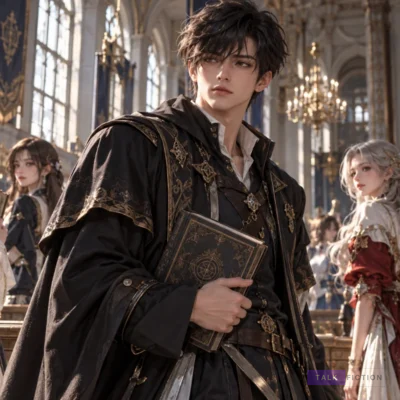




Spoiler Warning: This article contains major spoilers for Cavalier With the Truth, also published in English as The Lady Who Lied Her Way to Knighthood and known in Japan as Sagishi (詐騎士).
Cavalier With the Truth begins with one enormous deception: Ruzée, the unusual young knight at the center of the story, is actually a girl disguised as a boy. But her gender is only part of the lie. Ruzée has also falsified her age, social status and even her supposed remaining lifespan. Her secret eventually becomes impossible to maintain, and the manga moves far beyond its original cross-dressing-knight premise into political intrigue, supernatural conflicts, sainthood and Ruzée openly serving as a female knight.
Here are the major Cavalier With the Truth manga spoilers and what they mean for Ruzée’s story.
Cavalier With the Truth Spoilers at a Glance
| Question | Spoiler Answer |
|---|---|
| Is Ruzée really a boy? | No. Ruzée is a girl disguised as a male knight. |
| Is her gender her only lie? | No. Her age, status and supposed lifespan are also false. |
| What magic does Ruzée use? | Puppeteering magic, which lets her manipulate her own body and has broader applications as the story develops. |
| Does her identity stay secret forever? | No. Her female identity is eventually exposed. |
| When is her gender exposed? | A major turning point occurs around the events adapted in manga Volume 5. |
| Does Ruzée remain a male knight afterward? | No. Her position and public identity change significantly. |
| Does she meet Noiri? | Yes. Finding Noiri becomes part of a major later storyline. |
| Does Ruzée become a female knight? | Yes. Later in the manga she openly takes on a female knight role. |
| Is there romance? | Yes, but it develops slowly alongside the fantasy and political plot. |
| Who is most important romantically? | Prince Gilnest is the central romantic figure around Ruzée. |
| Is the manga finished? | No confirmed manga ending should currently be assumed; 15 Japanese collected volumes are available. |
What Is Cavalier With the Truth About?
Cavalier With the Truth follows Ruzée, a highly unusual recruit serving in a kingdom’s knight order.
To almost everyone around her, Ruzée appears to be a young man. She even helps protect her friend Zexen, who is frequently mistaken for a girl, creating an intentional reversal: people focus on Zexen’s feminine appearance while overlooking the fact that Ruzée is actually female.
Her greatest advantage is a special form of magic commonly translated as puppeteering. Ruzée can use it to manipulate her own body, allowing her to perform feats that make her exceptionally difficult to categorize as an ordinary knight.
The deception goes much further than cross-dressing.
Ruzée is lying about:
- her gender,
- her age,
- her social status,
- elements of her background,
- and even her supposed lifespan.
That collection of false identities is central to the Japanese title Sagishi, which plays directly into the idea of Ruzée living as a deceptive or “fraudulent” knight.
Who Is Ruzée Really?
Quick Answer
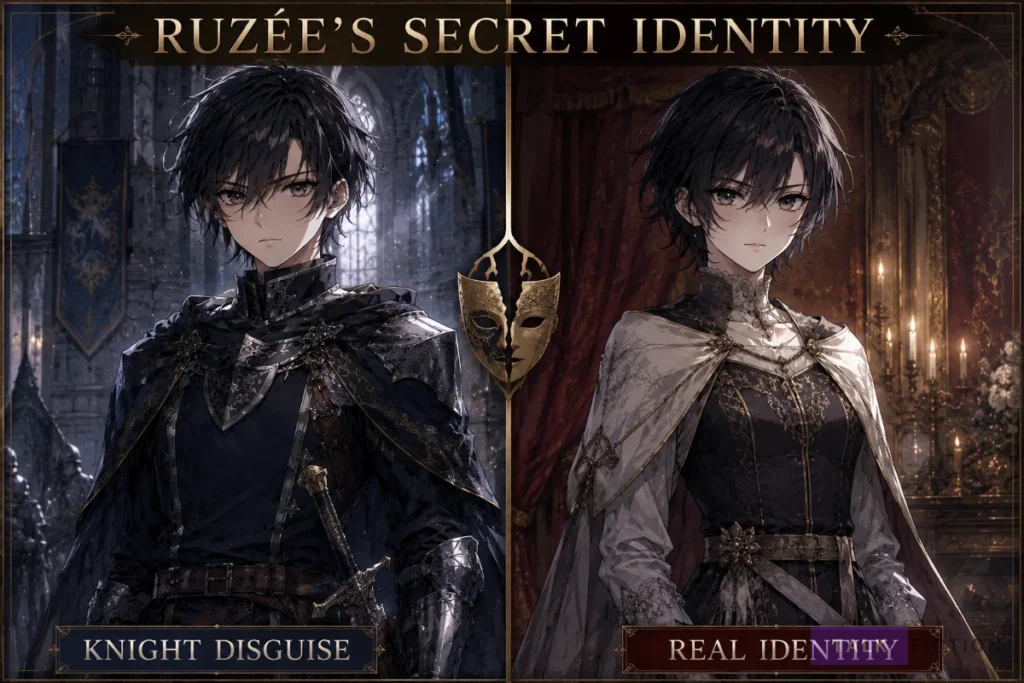
Ruzée is a girl who enters the knights while presenting herself as male. Her disguise is not simply a joke or cosmetic twist; it is connected to the larger circumstances surrounding her identity, past and objectives.
The opening chapters deliberately make the gender reversal part of the comedy.
Zexen looks feminine and attracts attention for it. Ruzée, meanwhile, behaves with enough confidence and competence that people accept her as a male knight without realizing the more important secret is standing beside him.
Ruzée is also far from the conventional helpless heroine.
She is intelligent, physically capable, sharp-tongued and willing to use methods other protagonists might avoid. Her puppeteering magic makes her particularly unpredictable, while her personality lets her interact with powerful characters without becoming subordinate to them emotionally.
That remains important once Prince Gilnest enters the picture.
What Is Ruzée’s Puppeteering Magic?
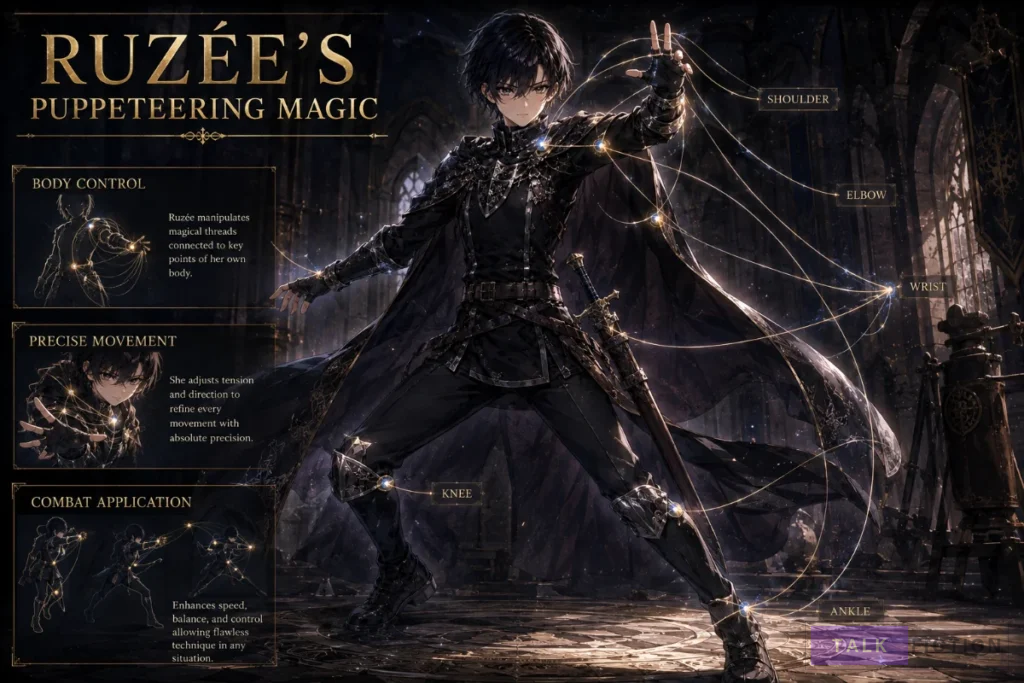
Ruzée possesses a rare ability generally described in English as puppeteering magic.
At its most basic level, it allows her to manipulate her own body as though she were controlling a puppet. That explains some of the seemingly impossible physical feats she performs and helps make her effective despite the risks surrounding her false identity.
As the story expands, puppeteering becomes more than a convenient explanation for Ruzée’s physical abilities. It becomes part of the manga’s wider supernatural world and one reason Ruzée is so valuable—and potentially dangerous—to the people around her.
The series gradually expands beyond ordinary knights and human politics into a world involving unusual magical abilities, monsters and different peoples.
This is one reason Cavalier With the Truth should not be reduced to a simple “girl disguises herself as a knight” romance.
Does Prince Gilnest Discover Ruzée Is a Girl?
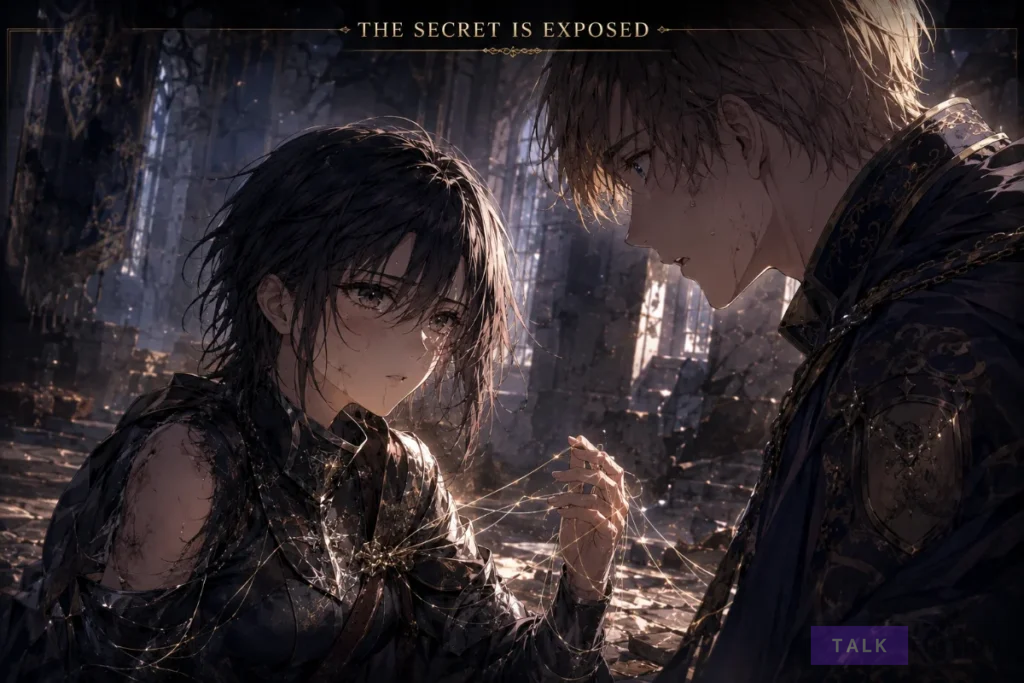
Yes. Ruzée’s female identity does not remain hidden forever.
Prince Gilnest becomes increasingly involved in Ruzée’s life after taking an interest in the strange young knight. Their early interactions build around suspicion, conflict, mutual usefulness and Ruzée’s refusal to behave as people expect around royalty.
The major breakthrough comes during the storyline adapted in Volume 5.
Ruzée and Gilnest are investigating wrongdoing when a monster attack changes the situation dramatically. Gilnest is abducted, forcing Ruzée into a dangerous attempt to rescue him.
Ruzée pushes herself hard enough to exhaust her magical power.
During the resulting crisis, the secret she has been protecting finally collapses:
Gilnest learns that Ruzée is female.
This is one of the most important spoilers in the manga because it permanently changes the premise.
The story can no longer depend solely on “Will everyone discover that Ruzée is a girl?”
Instead, it begins exploring what happens after a secret identity stops being sustainable.
What Happens After Ruzée’s Gender Is Revealed?
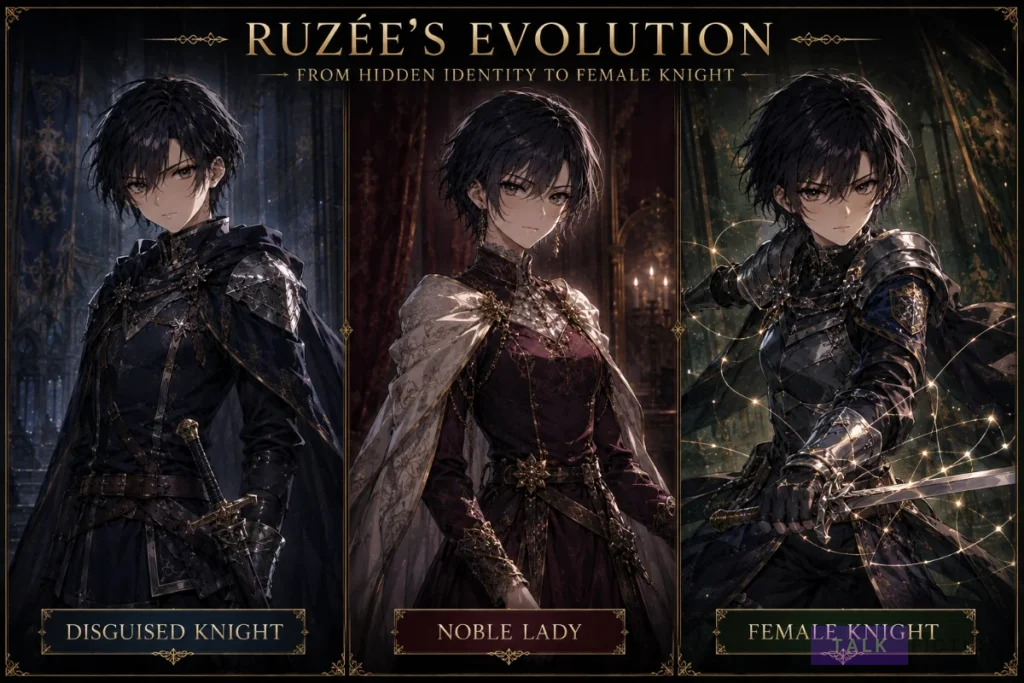
Ruzée’s story does not end when her gender secret breaks.
In fact, that is where the scope of the manga becomes considerably larger.
By Volume 7, her original knight life has ended. Circumstances lead to Ruzée becoming connected publicly with the Obzeek family as their daughter, giving her another identity and social position to navigate.
This is a clever evolution of the series’ central theme.
At first, Ruzée survives by presenting herself as a boy.
Later, she must navigate the expectations attached to being publicly treated as a young lady.
The clothes and social role may change, but Ruzée herself does not suddenly become a passive noblewoman.
Does Ruzée Find Noiri?
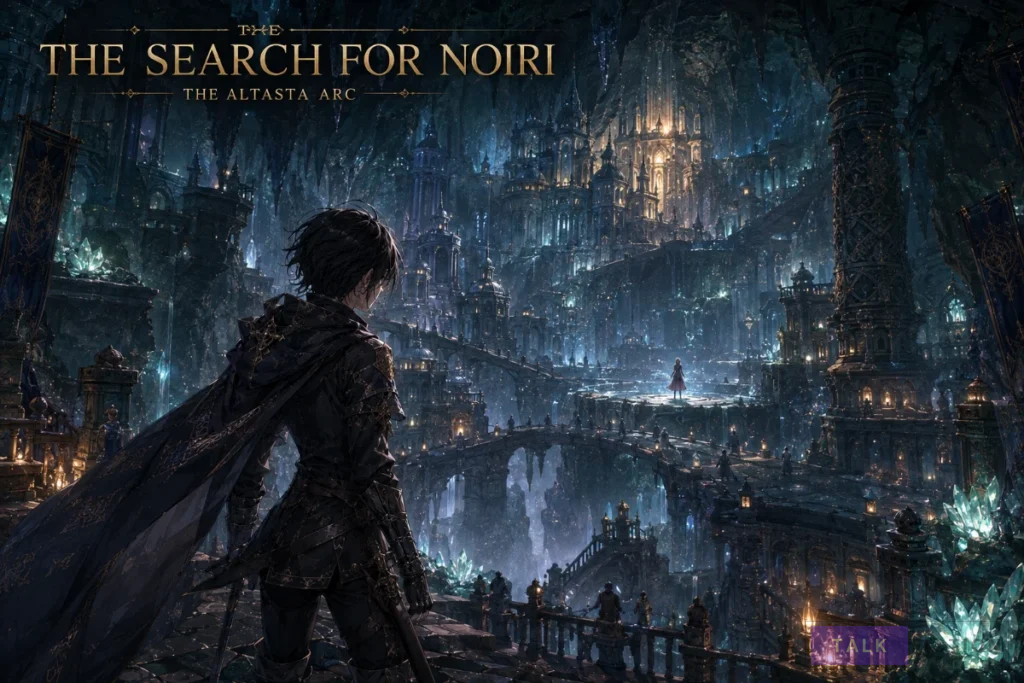
Yes. The search for Noiri eventually leads Ruzée into the underground empire of Altasta.
By Volume 7, Ruzée and her companions travel to Altasta’s fifth district while pursuing the person they have long been searching for.
The storyline reaches an important transition when Ruzée reunites with Noiri and eventually returns to the surface.
This arc also demonstrates how far the series has moved from its seemingly simple beginning.
What starts inside a knight order gradually opens into a much wider fantasy world involving different societies, supernatural beings, monsters and political interests.
Noiri also continues to matter after the initial reunion rather than disappearing from the narrative.
Later, Ruzée travels underground again with Princess Grandina and Sergius to meet Noiri’s child.
Why Does Ruzée Start Dressing as a Lady?
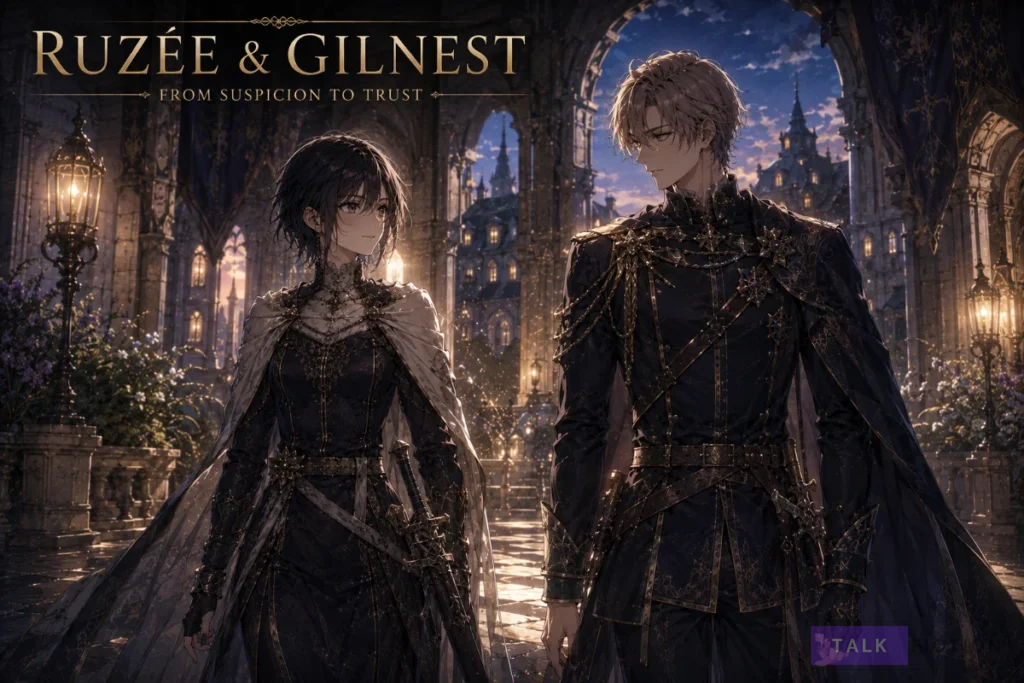
After returning from the underground empire, Ruzée begins serving Prince Gilnest again—but now openly dressed as a lady rather than maintaining her original male-knight presentation.
This begins another phase of the story.
Ruzée is surrounded by political schemes in the capital and is forced to operate within social expectations very different from those of the knight order.
That does not make her life peaceful.
Her later adventures include confrontations involving criminals and aristocrats, political complications and even an abduction.
The important character point is that changing Ruzée’s clothes does not change her personality.
She remains Ruzée.
Does Ruzée Get Kidnapped?
Yes. Ruzée is kidnapped during the later noblewoman phase of the story.
By Volume 9, she has left her original knight position and is serving Gilnest while dressed as a lady.
Her supposedly more refined life includes dealing with child gangs, mafia-related trouble and working as a tutor before she suddenly becomes the victim of an abduction.
This reinforces one of the manga’s recurring patterns: Ruzée can change roles, but danger follows her into almost every environment.
Does Ruzée Become a Knight Again?
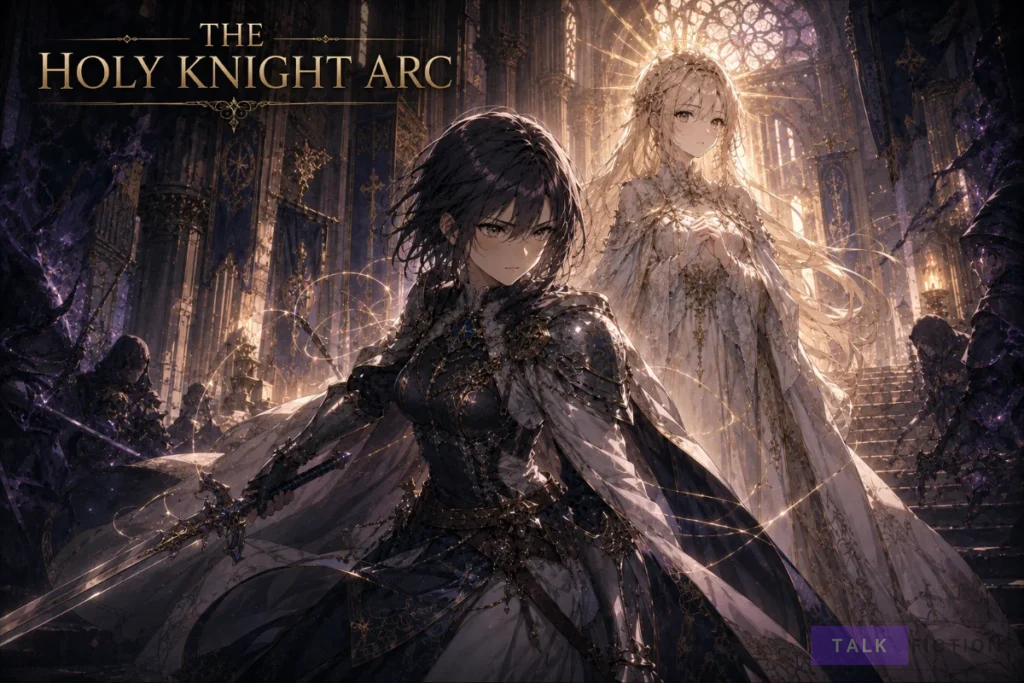
Yes—but the circumstances are very different from the beginning.
Later in the manga, the appearance of a new Saint changes Ruzée’s priorities.
Rather than returning to her original deception as a male recruit, Ruzée seeks to prove herself capable of becoming a Holy Knight so that she can protect the new Saint.
This is an important piece of character progression.
At the beginning, Ruzée has to lie about being male in order to occupy her position.
Later, she can operate as a female knight.
By Volume 14, this transition is explicit: Ruzée is functioning as a woman knight charged with protecting the Saint.
The contrast is one of the strongest ways to understand her overall journey.
Early Ruzée: a girl secretly pretending to be a male knight.
Later Ruzée: a woman openly fighting as a knight.
Who Is the New Saint?
The later manga introduces a new Saint named Erine.
Her arrival creates another major stage in Ruzée’s story because protecting her becomes important enough for Ruzée to pursue Holy Knight status.
The Saint storyline also brings new threats.
Ruzée survives an attack involving a mysterious group of puppeteers and reaches the temple where Erine will live. Even there, however, tensions among the Holy Knights create further problems.
Gilnest then gives Ruzée an especially strange order: attack the temple.
The development makes clear that the later manga has become much more concerned with competing institutions, magical factions and political strategy than the earliest chapters suggest.
Is There Romance Between Ruzée and Gilnest?
Yes, there is romantic development between Ruzée and Prince Gilnest, but romance is not the only focus of the manga.
Their relationship works largely because the series does not immediately turn Ruzée into a conventional romantic heroine.
Gilnest begins as the troublesome prince who takes an interest in her and repeatedly pulls her into difficult situations. Over time, their proximity, trust and shared danger create stronger emotional undertones.
The romance remains gradual.
For example, later material includes Gilnest carrying Ruzée and openly commenting on her cuteness when she is drunk. Moments like these make his changing feelings increasingly difficult to dismiss as ordinary professional interest.
Ruzée, however, remains characteristically Ruzée.
She is not suddenly overwhelmed by romance, and the fantasy plot continues alongside the relationship.
That is why readers looking for a romance-first shoujo manga should adjust their expectations: Gilnest and Ruzée matter romantically, but the series gives substantial space to action, magic, political conflicts and Ruzée’s personal agenda.
Who Is Arasere, and Is She Gilnest’s Ex?
Volume 15 introduces another complication.
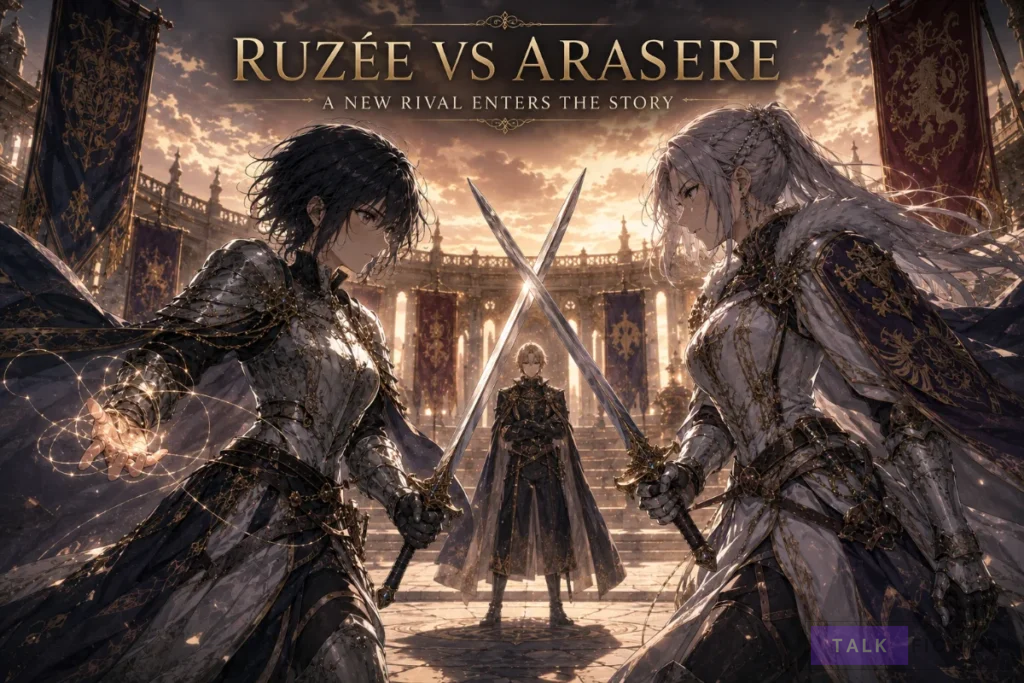
A princess from the neighboring country of Kateroa arrives to greet the new Saint Erine. Accompanying her is a female knight named Arasere.
Arasere appears to have a romantic history with Gilnest.
Their reunion is visibly hostile enough that the manga presents her as Gilnest’s former lover, or at minimum someone with significant personal history with him.
The situation becomes even more interesting when Ruzée is required to spar with Arasere.
This creates an obvious romantic complication around Gilnest while also allowing the story to put two capable female knights directly against one another.
Importantly, this should not be mistaken for proof of the manga’s final romantic outcome. Volume 15 is not a confirmed final ending.
What Happens in the Latest Japanese Manga Volume?
The latest verified collected Japanese manga volume is Volume 15, released digitally in September 2025.
Its central setup involves:
- the arrival of Kateroa’s princess,
- Saint Erine,
- female knight Arasere,
- Arasere’s past connection with Gilnest,
- tension between Gilnest and Arasere,
- and Ruzée being drawn into a match against Arasere.
The Japanese manga therefore remains far beyond the early gender-disguise storyline.
Readers discovering the series through its original English premise may be surprised by how extensively Ruzée’s circumstances change.
Does Cavalier With the Truth Have an Ending?
There is currently no verified manga ending that should be presented as the final conclusion of Ruzée’s story.
As of the latest verified publication information, the Japanese collected manga has reached 15 volumes.
The official English Alpha Manga page, under the newer title The Lady Who Lied Her Way to Knighthood, lists chapters through Chapter 86, dated February 23, 2026. The page currently labels the series “Suspended.”
That status is important.
“Suspended” on the English platform should not automatically be interpreted as “the story has ended.”
Likewise, spoilers from the original prose version should not automatically be presented as if the manga has already adapted them.
Until later manga material confirms the final outcome, claims such as “Ruzée definitely ends up with X in the manga ending” should be treated cautiously.
How Far Does Ruzée Change Across the Manga?
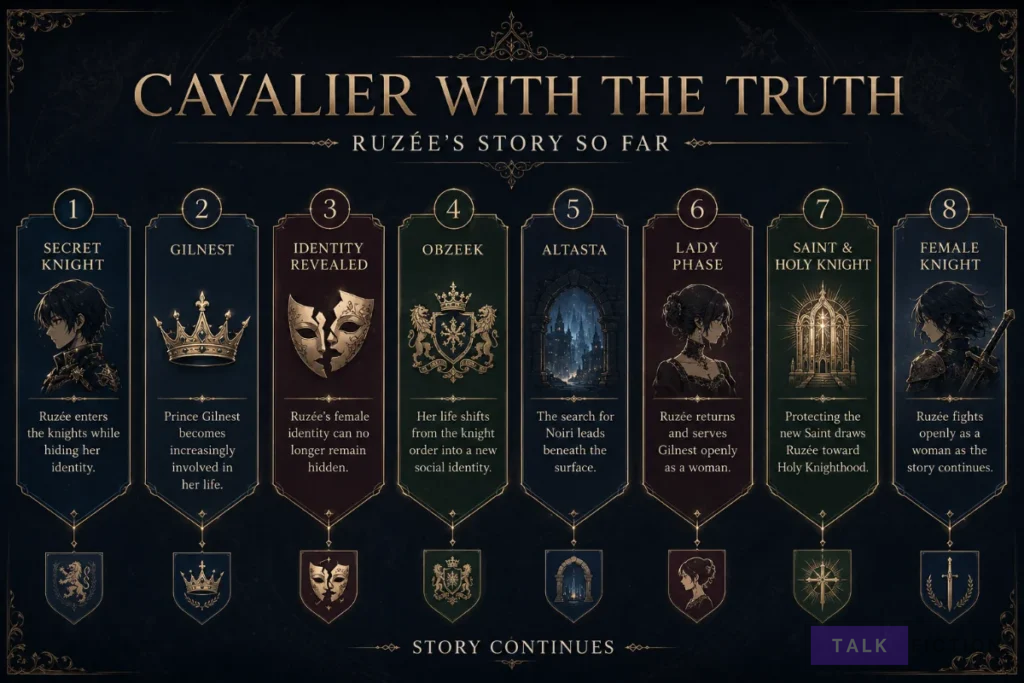
Ruzée’s progression can be summarized like this:
| Story Phase | Ruzée’s Situation |
|---|---|
| Beginning | Disguised as a male knight |
| Early knight arc | Works alongside Zexen and attracts Gilnest’s attention |
| Investigation arc | Becomes increasingly involved with Gilnest |
| Major reveal | Her female identity is exposed during a dangerous crisis |
| Post-knight phase | Her original knight life ends |
| Obzeek phase | Becomes publicly connected to the Obzeek family as a daughter |
| Altasta arc | Searches for and reunites with Noiri |
| Lady phase | Returns to the surface and serves Gilnest dressed as a lady |
| Later adventures | Faces crime, politics, monsters and further threats |
| Saint arc | Attempts to become a Holy Knight to protect the new Saint |
| Female knight phase | Fights openly as a woman rather than hiding as a man |
| Volume 15 | Encounters Arasere, a female knight with history involving Gilnest |
This progression explains why the manga’s title remains appropriate even after the first major secret is exposed.
Ruzée’s story has always been about more than one disguise.
Why Is Cavalier With the Truth Different From a Typical Cross-Dressing Romance?
The biggest difference is that Ruzée’s disguise is the starting mechanism, not the entire plot.
Many gender-disguise stories build almost exclusively toward the moment when the male lead learns the heroine is a woman.
Cavalier With the Truth actually moves beyond that point.
Ruzée’s life continues to transform through new identities and social roles. She moves through the worlds of knights, nobility, underground societies, political intrigue and religious authority while remaining an unusually aggressive and capable protagonist.
Even the romance develops around that larger story rather than replacing it.
The result is closer to a long-running fantasy adventure with shoujo romance elements than a simple secret-gender love story.
Is Cavalier With the Truth Worth Reading?
Readers who enjoy competent female leads, gender disguise, fantasy politics, unusual magic and slow-burn romantic tension have plenty to like here.
Ruzée is the main attraction.
She is not written simply as a heroine waiting for her secret to be discovered. Her intelligence, willingness to manipulate situations and unusual morality give the story an unpredictable quality.
The manga is particularly suitable for readers who like:
- powerful female protagonists,
- women disguised as men,
- knight settings,
- fantasy world-building,
- unconventional magic systems,
- action mixed with comedy,
- political intrigue,
- gradual romance,
- and protagonists who are not always conventionally heroic.
Readers primarily interested in immediate romance may find the progression slow, because the series consistently gives its broader fantasy plot room to develop.
Final Thoughts
The biggest Cavalier With the Truth spoiler is not simply that Ruzée is a girl. The manga tells readers that almost immediately.
The more important story is what happens as her carefully constructed identities begin to fall apart.
Gilnest discovers her gender, her original knight life ends, she enters noble society, reunites with Noiri, becomes involved in increasingly complicated supernatural and political conflicts and eventually returns to knighthood openly as a woman.
Meanwhile, her relationship with Gilnest gradually develops without turning the manga into a romance-only story.
And as of the latest verified manga material, Ruzée’s journey should not be treated as conclusively finished. Volume 15 introduces fresh tension through Saint Erine, Kateroa and Gilnest’s apparent former lover Arasere, leaving plenty of story still unresolved.
For readers who came for the secret female knight premise, the real surprise is how much larger Ruzée’s world becomes after that secret stops being the only thing defining her.
Frequently Asked Questions
Is Ruzée a girl in Cavalier With the Truth?
Yes. Ruzée is female but begins the story disguised as a young male knight. Her gender is only one of several details about herself that she has falsified.
What is Ruzée lying about?
Ruzée lies about her gender, age, status and supposed lifespan. Her complicated false identity is the basis for the series’ Sagishi title and much of the early plot.
Does Gilnest find out Ruzée is a girl?
Yes. Ruzée’s gender is eventually exposed to Prince Gilnest. A crucial reveal occurs during the dangerous events adapted in manga Volume 5.
Why does Ruzée disguise herself as a man?
Her disguise allows her to function inside the male knight environment while concealing a much broader set of personal circumstances. The story later reveals that her deception extends well beyond gender.
What power does Ruzée have?
Ruzée uses puppeteering magic, an unusual form of magic that allows her to manipulate her body and perform extraordinary actions.
Does Ruzée stop being a knight?
Her original life as a disguised male knight ends, but that does not permanently remove knighthood from her story. Later she pursues Holy Knight status and fights openly as a woman.
Does Ruzée become a female knight?
Yes. Later manga material explicitly places Ruzée in the role of a female knight while she works to protect the new Saint.
Who is the main male lead in Cavalier With the Truth?
Prince Gilnest is the most important romantic male figure surrounding Ruzée and becomes deeply involved in both her adventures and personal development.
Do Ruzée and Gilnest have romance?
Their relationship develops romantic undertones and increasingly explicit affectionate moments, but the romance is gradual and shares the story with action, fantasy and political plots.
Who is Noiri?
Noiri is an important figure Ruzée spends considerable time trying to find. The search eventually takes Ruzée and her companions into the underground empire of Altasta.
Who is Saint Erine?
Erine is the new Saint introduced in the later manga. Protecting her becomes important enough that Ruzée seeks to demonstrate her ability to serve as a Holy Knight.
Who is Arasere?
Arasere is a female knight accompanying a princess from neighboring Kateroa in Volume 15. She appears to have a troubled romantic history with Prince Gilnest and later faces Ruzée in a sparring match.
Is Cavalier With the Truth the same as Sagishi?
Yes. Sagishi (詐騎士) is the Japanese title associated with the series. Cavalier With the Truth is an older English title, while the official Alpha Manga release currently uses The Lady Who Lied Her Way to Knighthood.
Is The Lady Who Lied Her Way to Knighthood the same manga?
Yes. The Lady Who Lied Her Way to Knighthood is the current title used by Alpha Manga for the series previously known to many English readers as Cavalier With the Truth.
Is Cavalier With the Truth manga finished?
A final manga ending should not currently be assumed. The Japanese collected edition has reached Volume 15, while Alpha Manga’s English page lists Chapter 86 and currently marks its serialization as suspended.

Other Articles