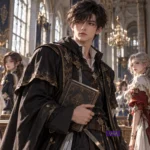



If you are looking for the History Is in the Library novel, you are most likely searching for the Korean fantasy-romance novel more commonly indexed in English as History at the Library (역사는 도서관에서). Written by Seol Lee Soo (설이수), the story follows Vivian, an Imperial Library night librarian who secretly writes adult romance novels under the pen name Perdi. Her carefully separated lives become complicated when she encounters Ray, a mysterious man hiding a major royal identity of his own.
This guide explains the novel, Vivian and Ray, their secrets, major spoilers, completion status, and its adaptation.
Spoiler Warning: The sections marked as spoilers discuss character identities and important story developments from History at the Library.
History Is in the Library Novel: Quick Facts
| Detail | Information |
|---|---|
| Common English title | History at the Library |
| Search/alternate title | History Is in the Library |
| Korean title | 역사는 도서관에서 |
| Author | Seol Lee Soo / 설이수 |
| Original language | Korean |
| Main protagonist | Vivian |
| Vivian’s pen name | Perdi |
| Male lead | Ray |
| Setting | Imperial Library / fantasy empire |
| Genres | Fantasy, Romance, Comedy, Adult |
| Novel status | Completed |
| Main story length | 170 chapters listed |
| Adaptation | Manhwa/webtoon adaptation exists |
The naming difference is worth remembering. English readers may encounter History Is in the Library, History at the Library, and the Korean title 역사는 도서관에서 while searching for the same story.
What Is History Is in the Library Novel About?
History at the Library follows Vivian, a night librarian at the Imperial Library who secretly writes popular adult romance fiction as Perdi. Her attempt to improve the realism of her writing leads her toward Ray, a mysterious library visitor whose true identity connects directly to the imperial family.
That setup creates two parallel mysteries.
Vivian is hiding the fact that the seemingly ordinary librarian and famous writer Perdi are the same woman. Ray, meanwhile, is not simply an attractive stranger wandering around the library.
Both characters are therefore interacting while concealing important truths.
The novel builds its romance around those overlapping secrets rather than introducing both characters with everything already revealed.
Who Is Vivian in History at the Library?
Vivian is the female protagonist and works the night shift at the Imperial Library.
Her occupation makes her appear relatively ordinary compared with the powerful nobles and members of the imperial family around her. Beneath that professional identity, however, she has another life.
Vivian is also an author.
And not just an unknown hobby writer.
She secretly publishes adult romance fiction under the pseudonym Perdi.
Her double life creates much of the novel’s central comedy and tension because the respectable Imperial Library employee cannot simply announce what she writes outside her official duties.
Why Does Vivian Write as Perdi?
Writing allows Vivian to maintain a completely different identity outside the library.
As Perdi, she can create the kind of romantic and adult fiction that would be difficult to reconcile openly with her official position.
Eventually, however, writing becomes the source of a new problem.
Her work needs greater realism.
That pushes Vivian toward experiences she previously approached primarily through imagination—and brings her secret literary life closer to her real one.
Who Is Perdi?
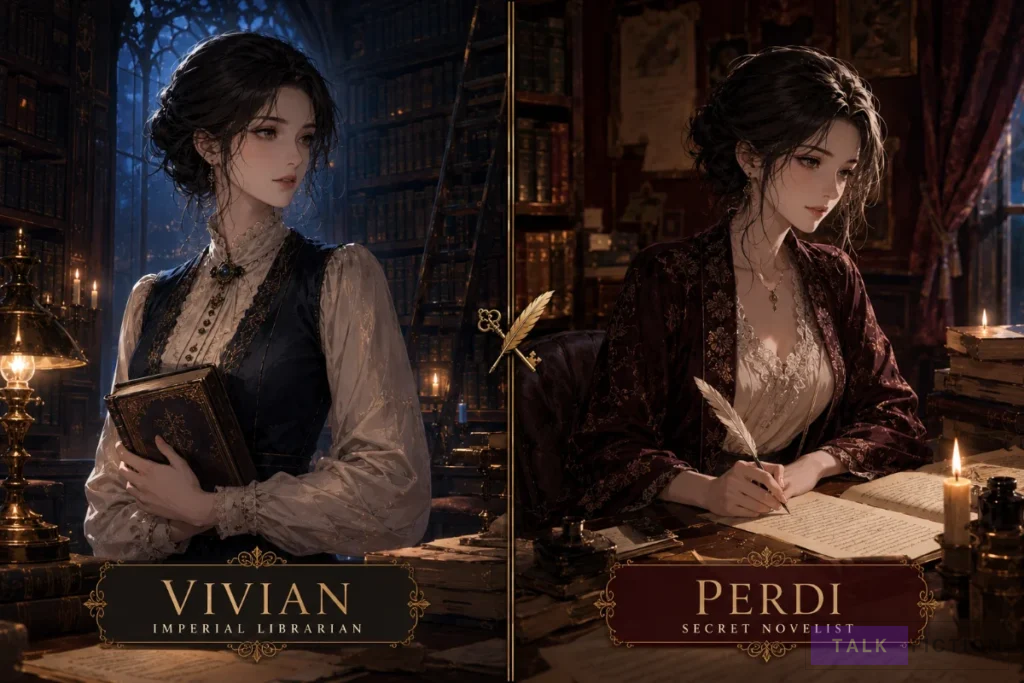
Perdi is Vivian’s secret pen name. They are not two different characters.
This distinction is important because basic summaries can make Perdi sound like a separate person.
Vivian lives with two identities:
Vivian — Imperial Library night librarian.
Perdi — her secret identity as a successful adult-romance novelist.
Her need to protect that connection becomes one of the story’s important identity-based conflicts.
It also gives the title an extra layer of meaning: the library is not merely a backdrop for the romance. It is the place where Vivian’s controlled professional life begins colliding with experiences that affect the stories she writes.
Why Is Vivian’s Writing Important to the Plot?
Vivian’s profession as an author is not just a quirky character detail.
Her difficulty writing convincing intimacy provides an early catalyst for the story. She can imagine romance as Perdi, but translating experiences she does not fully understand into believable fiction presents a problem.
That creates an amusing contradiction:
She is known for writing adult romance while personally living under unusually restrictive circumstances.
The contrast between what Vivian writes and what Vivian has actually experienced becomes one of the novel’s defining early ideas.
What Is Vivian’s Chastity Contract?
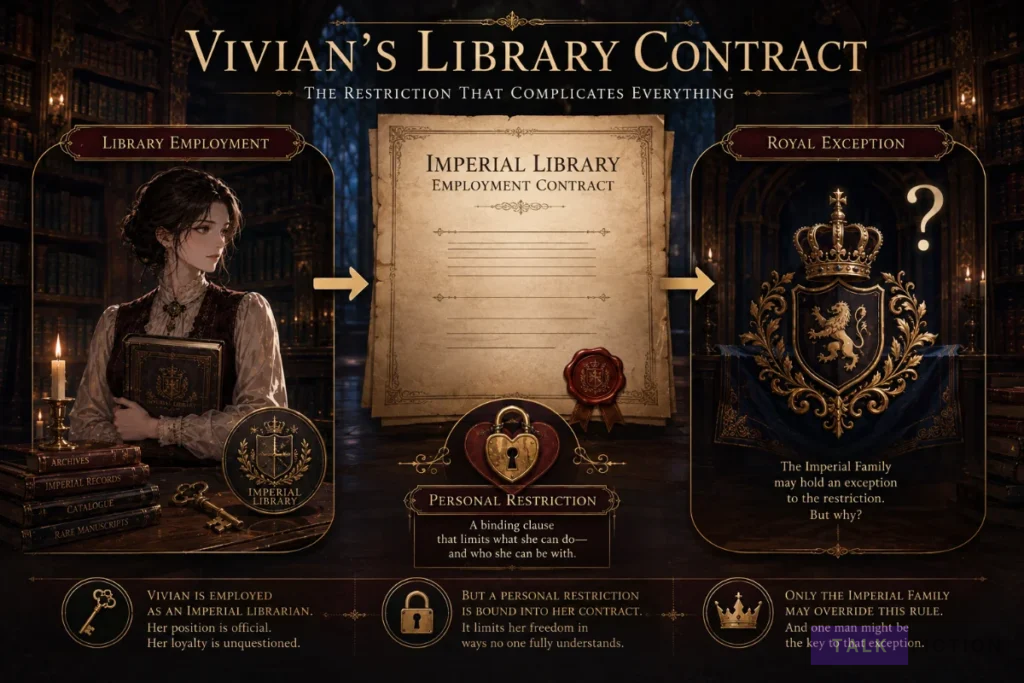
One of the stranger parts of Vivian’s situation is a restrictive chastity contract connected to her Imperial Library employment.
This makes her problem as Perdi significantly more complicated.
She needs greater authenticity for her adult writing, but her position restricts the very experiences she wants to understand.
There is, however, an important exception connected to the imperial family.
That exception becomes highly relevant once Ray’s identity enters the equation.
Who Is Ray in History Is in the Library?
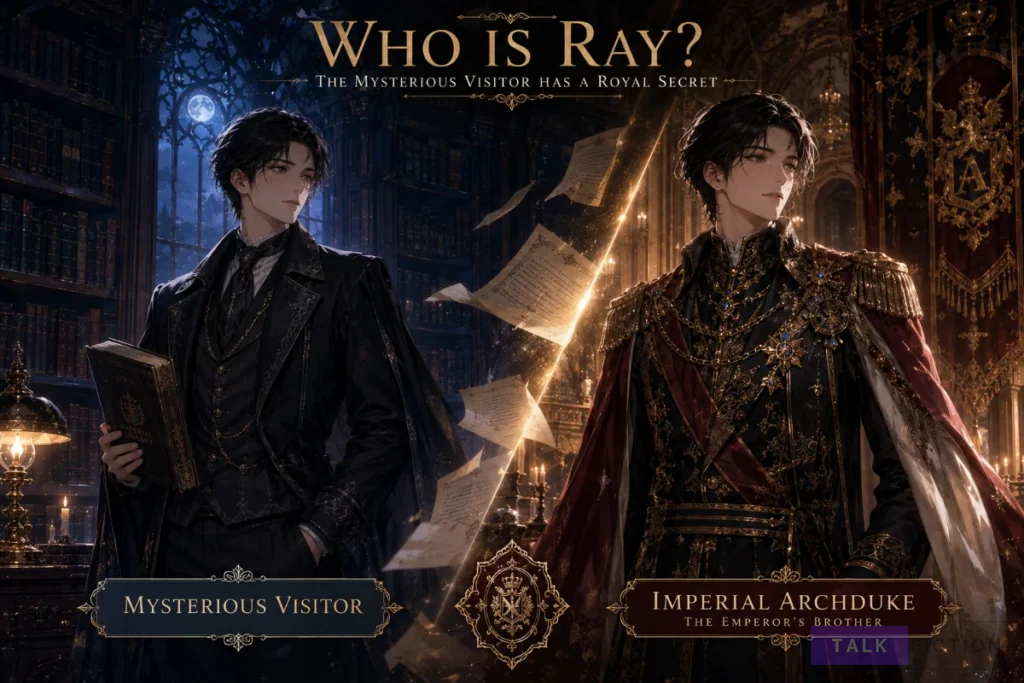
Ray is the main male lead and is secretly an Imperial Archduke—the Emperor’s brother.
Initially, Vivian encounters him as a mysterious man associated with the library rather than immediately understanding the full importance of his position.
His royal identity changes the meaning of their interactions.
Ray isn’t simply an attractive stranger who happens to interest Vivian. His status connects him directly to the unusual restrictions governing her life.
That creates a particularly convenient—and dangerous—intersection between Vivian’s writing problem, employment restrictions and growing attraction to him.
Is Ray Really the Emperor’s Brother?
Yes. Ray is connected directly to the imperial family as the Emperor’s brother.
This is one of the most important early spoilers because it explains why his identity matters beyond romance.
The revelation transforms the relationship from an encounter between a librarian and mysterious visitor into one involving an ordinary-seeming employee and an exceptionally powerful royal figure.
Ray’s position also means that Vivian cannot treat their relationship as socially uncomplicated.
Even if personal attraction develops naturally, differences in power, status and secrecy remain part of the situation.
Why Does Ray Visit the Library?
The library functions as the space where Vivian and Ray’s otherwise separate worlds repeatedly intersect.
For Vivian, it is her workplace and the respectable half of her identity.
For Ray, it becomes the setting in which he can interact with her outside the straightforward expectations of court life.
That makes the Imperial Library more than scenery.
It provides the story with a controlled environment where two people carrying significant secrets can gradually learn about each other.
Do Vivian and Ray Fall in Love?
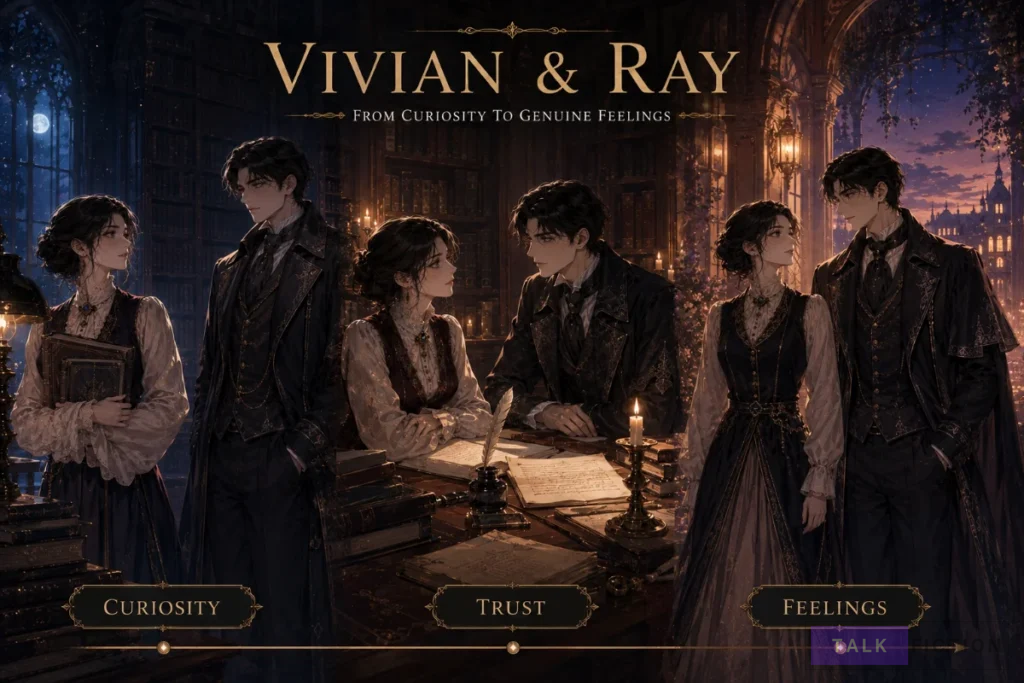
Vivian and Ray are the central romantic pairing of History at the Library, and their relationship develops far beyond their initial arrangement and curiosity.
Their dynamic begins under unusual circumstances.
Vivian’s motivation is tied partly to gaining experience that could improve her writing as Perdi. Ray, meanwhile, has his own identity and circumstances that Vivian does not initially understand completely.
As their encounters continue, however, the relationship becomes increasingly personal.
This transition—from practical curiosity and physical attraction toward genuine emotional attachment—is central to the romance.
It also creates new problems.
An arrangement is easier to control when neither person cares deeply about the other. Once real feelings become involved, their hidden identities matter much more.
Does Ray Discover Vivian Is Perdi?
Vivian’s identity as Perdi is one of the central secrets hanging over the relationship.
The importance of the reveal is easy to understand: Ray is getting to know Vivian while another significant part of her life remains concealed behind a pen name.
The Perdi secret is therefore not equivalent to hiding a minor hobby.
Writing defines a major part of Vivian’s private life and is directly connected to why she became interested in gaining romantic experience in the first place.
When her personal and literary worlds stop being easily separable, the original premise effectively comes full circle.
History Is in the Library Novel Spoilers
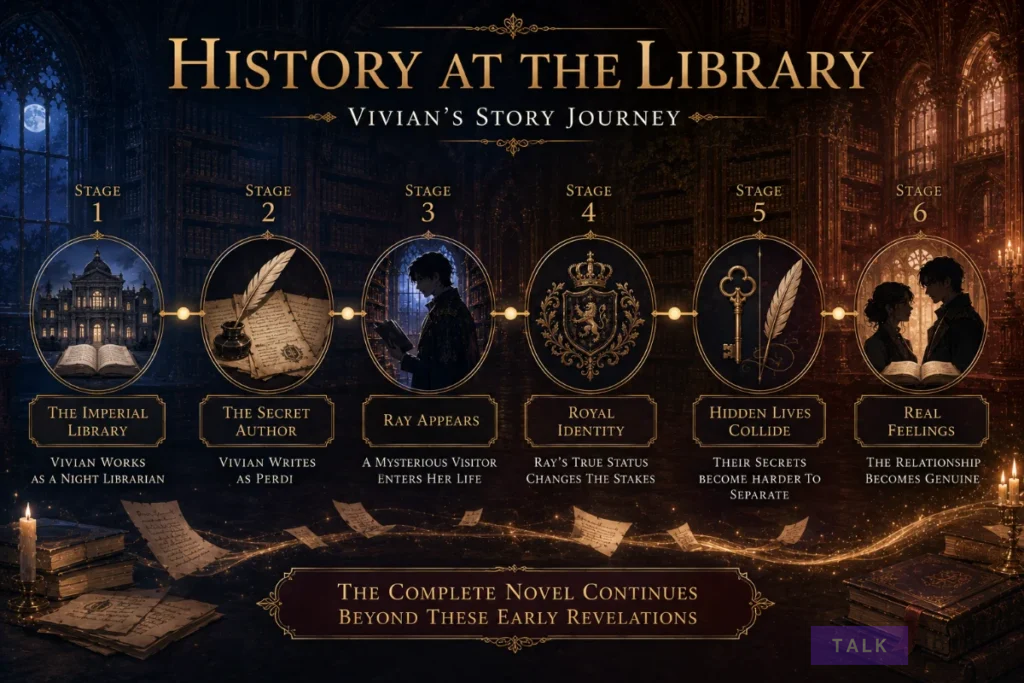
The novel becomes much larger than its initial “librarian secretly writes adult novels” setup suggests.
The biggest early spoilers concern Vivian’s identity as Perdi, Ray’s royal identity and the way their initially unusual relationship develops into genuine emotional attachment.
But Ray’s status is not the only mystery surrounding him.
Later parts of the story expand the significance of his personal circumstances and introduce revelations that make his identity more complicated than simply “the Emperor’s brother.”
Because reliable English summaries of every late chapter are limited, highly specific claims about individual late-novel scenes should be treated cautiously unless checked against the Korean text.
Major Early Spoilers
The early story establishes several important truths:
- Vivian and Perdi are the same woman.
- Vivian works nights at the Imperial Library.
- Her successful writing career is secret.
- Her lack of personal experience becomes a problem for her writing.
- Her employment includes an unusual chastity restriction.
- Ray is not an ordinary library visitor.
- Ray is an Imperial Archduke and the Emperor’s brother.
- His royal position makes him particularly important to Vivian’s situation.
- Their relationship develops beyond its unusual starting arrangement.
These revelations establish the basic romantic conflict.
Both protagonists are presenting incomplete versions of themselves.
Vivian and Ray Relationship Spoilers
Vivian and Ray’s relationship does not remain purely transactional or experimental.
Their continued encounters create genuine emotional attachment.
This matters because the original premise allows Vivian to think about intimacy almost analytically: she is a writer trying to understand something she has previously described largely through imagination.
Ray makes that separation increasingly difficult.
The closer they become, the less Vivian can divide her life neatly into categories:
librarian and novelist, reality and fiction, professional Vivian and private Perdi.
Ray faces a similar problem because his own identity carries responsibilities and secrets that cannot remain irrelevant to a serious relationship.
Is Ray Hiding More Than His Royal Identity?
Yes. Ray’s identity is more complicated than simply being an Imperial Archduke.
This is an area where spoiler summaries often become unreliable because later revelations are condensed differently across unofficial English discussions and reviews.
What can safely be said is that the novel does not stop developing Ray once his connection to the Emperor is known.
His deeper circumstances become important to the later plot and to understanding why his relationship with Vivian cannot be reduced to a conventional prince-and-commoner romance.
Readers who want the full experience should therefore avoid assuming that “Ray is the Emperor’s brother” is his final major reveal.
It isn’t the end of the mystery surrounding him.
What Makes Vivian and Ray’s Romance Different?
Their relationship is built around a particularly appropriate theme for this story:
fiction versus reality.
Vivian begins as someone professionally skilled at imagining romance.
Ray becomes part of the reality she cannot fully control.
The irony is that experience may help Vivian understand what she writes, but real emotional attachment is considerably messier than researching material for a novel.
This gives the romance a self-aware quality.
Vivian isn’t merely falling for a powerful fantasy hero; she is a romance writer discovering that living through complicated feelings is different from arranging them neatly on a page.
Who Does Vivian End Up With?
Ray is the central male lead and romantic partner associated with Vivian’s completed story.
Readers searching specifically for the romantic outcome should therefore not expect the novel to suddenly replace him with another primary love interest.
However, reducing the ending to “Vivian chooses Ray” misses much of what needs resolution.
By the later story, their relationship is tied to identity, Vivian’s future, Ray’s circumstances and the gap between the lives they originally presented to each other and who they actually are.
Does History Is in the Library Have a Happy Ending?
The completed status of the novel means Vivian and Ray’s main story does reach a conclusion rather than stopping mid-arc.
Reader reports of the completed work characterize the romantic resolution positively, but there is not enough reliable, detailed English primary-source material available to reconstruct every final chapter scene with confidence.
For that reason, it is safer to distinguish the verified romantic pairing from scene-by-scene ending claims circulating through unofficial summaries.
In other words:
Vivian and Ray are the central endgame relationship, but readers looking for an exact Chapter 170 reconstruction should consult the completed Korean novel rather than rely on invented English “ending explained” details.
Is History Is in the Library Novel Completed?
Yes. History at the Library is listed as a completed Korean web novel with 170 chapters.
That is useful for readers who dislike starting romance novels without knowing whether the main story has finished.
The completion status also separates the novel from its newer visual adaptation.
The original story is complete even though readers discovering it through the manhwa may still be near the beginning of Vivian and Ray’s relationship.
How Long Is History at the Library?
The web novel is commonly listed with 170 chapters.
The Korean book edition is also catalogued separately in collected form, which can create confusing numbers when readers compare chapter databases with book platforms.
The safest distinction is:
| Version | Status |
|---|---|
| Korean web novel | Completed |
| Main web-novel listing | 170 chapters |
| Collected/book edition | Published separately |
| Manhwa adaptation | Ongoing/newer adaptation |
Therefore, a website showing a smaller chapter number does not necessarily mean the original novel is unfinished.
It may simply be hosting a translation or adaptation that has not caught up.
Does History Is in the Library Have a Manhwa?
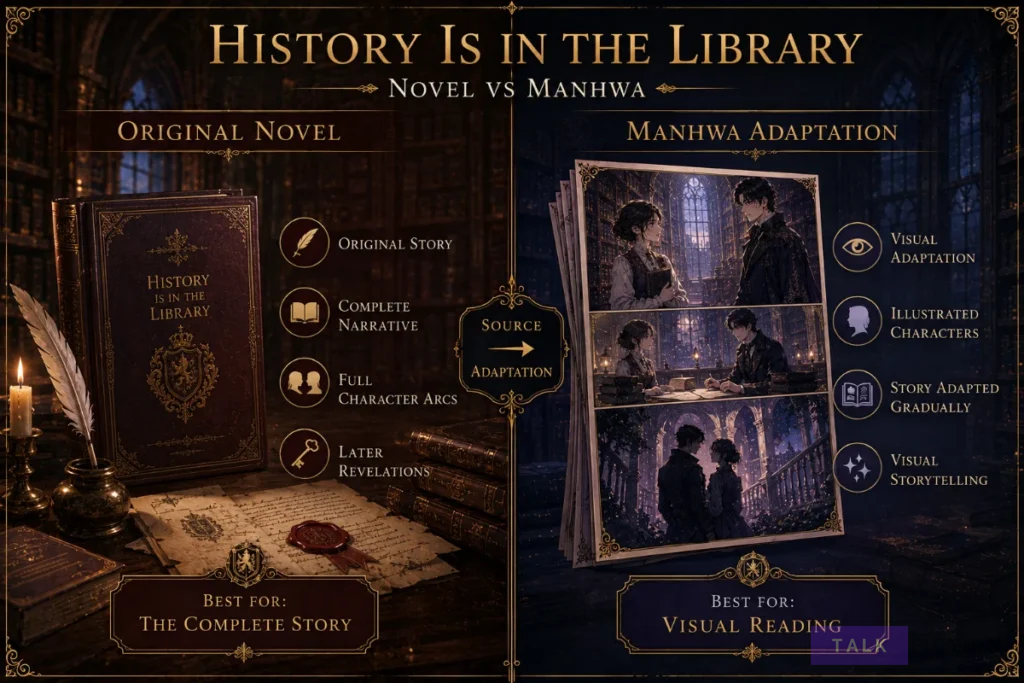
Yes. History at the Library has received a manhwa/webtoon adaptation.
This is especially relevant because some readers now encounter the title through manga/manhwa databases rather than novel platforms.
The adaptation brings Vivian, Ray and the Imperial Library setting into a visual format while drawing from a story whose original novel is already complete.
That creates an important distinction for spoiler searches:
Novel readers can know substantially more about the story than current manhwa readers.
History Is in the Library Novel vs Manhwa
| Feature | Novel | Manhwa |
|---|---|---|
| Original or adaptation? | Original story | Adaptation |
| Story status | Completed | Adaptation progressing |
| Vivian/Perdi premise | Fully developed | Introduced visually |
| Ray’s story | Complete in original narrative | Gradually being adapted |
| Romance progression | Full relationship arc available | Earlier progression |
| Best for | Full story and ending | Visual storytelling and characters |
| Spoiler risk | Highest | Lower if reading current adaptation only |
Readers who want the complete narrative should choose the novel.
Readers who primarily enjoy artwork, visual character interactions and a slower introduction to the story may prefer following the manhwa.
The two formats should not be treated as though they have reached the same narrative point.
Should You Read the Novel Before the Manhwa?
That depends on what you value most.
Read the novel first if:
- you want Vivian and Ray’s complete story,
- you don’t want to wait for adaptation chapters,
- you enjoy character thoughts and prose,
- you want later revelations,
- or you want to reach the completed romantic resolution.
Read the manhwa first if:
- visual presentation matters more to you,
- you enjoy discovering twists gradually,
- you want to see the Imperial Library and characters illustrated,
- or you prefer shorter episodic reading.
If avoiding spoilers matters, don’t research late novel chapters while following only the manhwa. The completed novel naturally contains developments the adaptation has not yet reached.
Why Is the Imperial Library Important?
The Imperial Library is more than the place where Vivian happens to work.
It represents her controlled public identity.
Vivian is a respectable night librarian there, while Perdi—the woman writing adult romance—is hidden from that professional world.
Then Ray enters that same space.
As a result, the library becomes where three supposedly separate parts of the story begin colliding:
Vivian’s job, Vivian’s secret writing career and Vivian’s relationship with Ray.
That makes the title thematically appropriate rather than merely descriptive.
What Are the Main Themes of History at the Library?
Several themes drive the story beneath its adult-romance premise.
Secret Identities
Vivian is Perdi.
Ray is far more important than he initially appears.
Both characters therefore enter their relationship without presenting their complete identities.
Fiction Versus Experience
Vivian can write romance professionally, yet writing about something and experiencing it are very different things.
The story repeatedly plays with that contradiction.
Public and Private Lives
Vivian’s respectable library position clashes with her secret literary career.
Ray likewise has a public status that complicates private relationships.
Emotional Vulnerability
Physical intimacy is not necessarily the hardest barrier between the protagonists.
Allowing another person to understand the parts of themselves they have deliberately hidden is considerably more difficult.
Is History Is in the Library Worth Reading?
History at the Library is best suited to readers who enjoy adult fantasy romance, secret identities, royal male leads and heroines with unusual professions.
Its strongest hook is Vivian.
Making the heroine both a librarian and a secret romance novelist gives the familiar royal-fantasy setup a more distinctive perspective.
The story may particularly appeal to readers who enjoy:
- Korean romance fantasy,
- adult romance,
- secret identities,
- hidden authors,
- librarian heroines,
- powerful royal male leads,
- identity reveals,
- comedy mixed with romance,
- and completed novels.
Readers looking only for political fantasy or action should know that romance and adult themes are central rather than incidental.
Final Thoughts
The History Is in the Library novel, better known in English as History at the Library, turns an unusual contradiction into its central romance: Vivian can write adult love stories as the famous Perdi, but her own life is far more restricted than her fiction suggests.
Ray disrupts that separation.
He begins as a mysterious presence around the Imperial Library but is revealed to be the Emperor’s brother and Imperial Archduke. As Vivian and Ray become closer, their relationship forces both characters to confront identities and circumstances they initially kept hidden.
For new readers, the most useful distinction is simple: the original Korean novel is complete, while the manhwa is an adaptation working through that already-finished story.
So if the manhwa leaves you wondering what happens next, the novel contains a much larger story waiting beyond the adaptation.
Frequently Asked Questions
What is History Is in the Library novel?
History Is in the Library commonly refers to the Korean romance-fantasy novel History at the Library (역사는 도서관에서) by Seol Lee Soo. It follows librarian and secret novelist Vivian and her relationship with Ray.
Is History Is in the Library the same as History at the Library?
Yes. History at the Library is the more commonly indexed English title, while readers and adaptation sites may also encounter History Is in the Library.
Who is Vivian?
Vivian is the female protagonist. She works the night shift at the Imperial Library while secretly maintaining a successful writing career.
Who is Perdi?
Perdi is Vivian’s secret pen name as an adult-romance novelist. Vivian and Perdi are the same person.
Who is Ray?
Ray is the central male lead. He is not an ordinary library visitor; he is an Imperial Archduke and the Emperor’s brother.
Does Ray know Vivian is Perdi?
Vivian’s identity as Perdi is one of the important secrets complicating their relationship as her private writing life and personal life increasingly overlap.
Do Vivian and Ray fall in love?
Yes. Their relationship develops beyond its unusual initial circumstances into genuine romantic and emotional attachment.
Who does Vivian end up with?
Ray is Vivian’s central romantic partner and the male lead associated with the completed relationship arc.
Is History at the Library completed?
Yes. The Korean web novel is listed as complete with 170 chapters.
How many chapters does History Is in the Library have?
The completed Korean web novel is commonly listed with 170 chapters. Translation and adaptation sites may show smaller totals because they have not necessarily reached the original ending.
Does History Is in the Library have a manhwa?
Yes. The story has a manhwa/webtoon adaptation based on the completed Korean novel.
Is the manhwa finished?
The visual adaptation should not be confused with the completed source novel. The novel’s story is complete, while the adaptation is progressing separately.
Is History at the Library an adult romance?
Yes. Adult romance is an important part of the premise and Vivian’s identity as Perdi, so readers should expect mature romantic themes.
What genre is History at the Library?
It is generally categorized as Korean fantasy romance with comedy and adult elements.
Should I read the novel or manhwa first?
Choose the novel if you want the complete story and later revelations. Choose the manhwa if you prefer visual storytelling and want to experience the plot more gradually.

Other Articles