



Princess Wei Yang is a Chinese historical romance novel by Qin Jian (秦简), known for its themes of rebirth, revenge, palace politics, family conflict, and complicated romance. Also known by titles such as The Princess Weiyoung, The Concubine’s Daughter Is Poisonous, and Jin Xiu Wei Yang, the story follows Li Wei Yang, a woman who gets a second chance at life after suffering betrayal and death in her previous lifetime.
The novel combines historical drama with revenge, political intrigue, family power struggles, and romance. It was later adapted into the popular 2016 Chinese television drama The Princess Weiyoung, although the drama significantly changes parts of the original story.
What Is Princess Wei Yang About?
The Princess Wei Yang novel begins with a devastating betrayal.
In her previous life, Li Wei Yang rises from an overlooked daughter of the Li family to become an empress. She supports Tuoba Zhen through his rise to power and gives him years of loyalty. However, once he becomes emperor, her position and sacrifices no longer protect her.
Tuoba Zhen eventually turns against her and favors her stepsister instead. Li Wei Yang is stripped of the life she fought to build and ultimately dies after being forced to drink poison.
But death is not the end of her story.
Li Wei Yang is reborn with memories of her previous life. This time, she refuses to repeat the same mistakes.
She no longer wants to become an empress or blindly sacrifice herself for someone else. Instead, she decides to protect herself, expose the people who betrayed her, and make those responsible pay for what they did.
Her second life transforms her from a neglected young woman into a much more calculating and determined figure.
The Story of Princess Wei Yang
Li Wei Yang is the daughter of Prime Minister Li Xiao Ran and a concubine. Because of the circumstances surrounding her birth, she spends much of her childhood away from the Li family’s center of power.
Her difficult upbringing gives her little reason to trust the people around her.
In her first life, however, she eventually becomes deeply involved with Tuoba Zhen. She helps him navigate the dangerous political world surrounding the imperial court and supports his ambitions.
Her loyalty comes at a terrible cost.
After Tuoba Zhen becomes emperor, the relationship that once seemed unbreakable begins to collapse. The woman who once helped him achieve power becomes disposable, while her stepsister becomes increasingly important to him.
Li Wei Yang’s death becomes the turning point of the entire story.
When she receives another chance at life, she remembers every betrayal, every political scheme, and every person who contributed to her downfall.
This time, she chooses revenge over blind loyalty.
Li Wei Yang: The Main Character
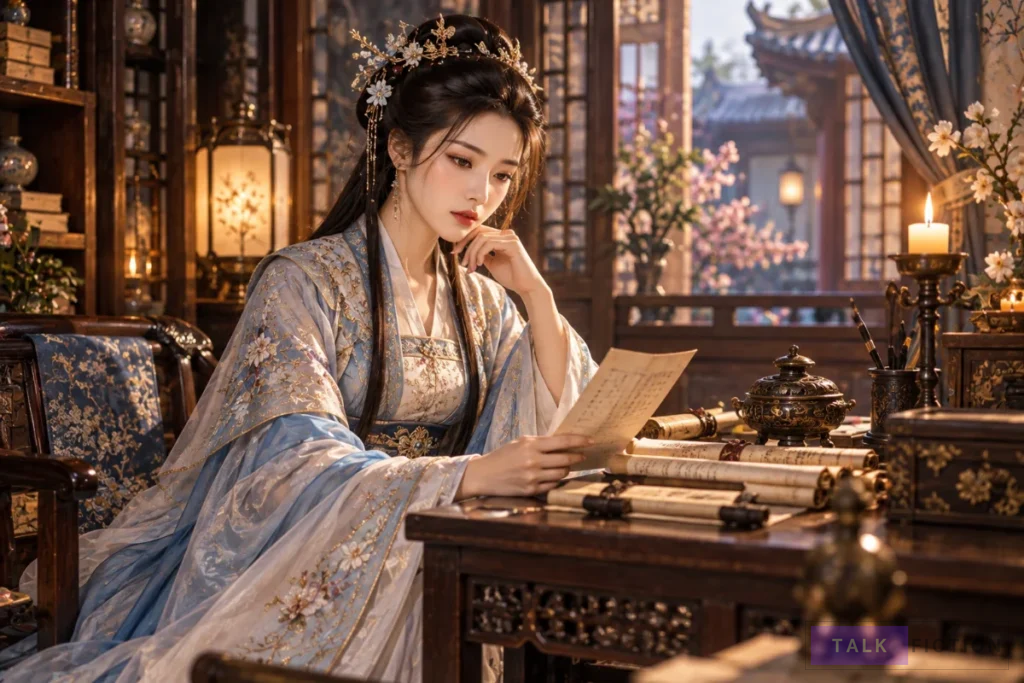
Li Wei Yang is the central character of the novel and one of its most important strengths.
Unlike a typical heroine who simply relies on a powerful romantic partner, Wei Yang gradually learns how to survive through intelligence, observation, patience, and political strategy.
Her greatest advantage is her knowledge of the future.
She already knows many of the dangers waiting for her, but changing the future is not as simple as avoiding familiar mistakes. Every decision creates new consequences, and the people around her are also capable of changing their plans.
Wei Yang therefore has to think several steps ahead.
Her character combines several contrasting qualities:
- Intelligent and observant
- Cautious because of her previous life
- Strong-willed
- Skilled at reading people
- Capable of deception when necessary
- Protective of people she genuinely trusts
- Determined to survive rather than sacrifice herself
- Increasingly involved in political struggles
Her journey is not simply about revenge. It is also about learning how to control her own fate.
Princess Wei Yang Characters
The novel contains a large cast of characters whose relationships are closely connected to family politics, imperial ambitions, and revenge.
Tuoba Zhen
Tuoba Zhen is one of the most important figures in Li Wei Yang’s past and plays a major role in the story’s emotional conflict.
In her previous life, Wei Yang supports him and helps him rise politically. Their relationship eventually becomes one of the central reasons for her tragedy.
His character represents one of the most painful lessons of Wei Yang’s first life: power can change relationships, and loyalty does not always guarantee loyalty in return.
Li Changle
Li Changle is Wei Yang’s elder half-sister and one of the major sources of conflict within the Li family.
Beautiful, privileged, and favored within the household, she occupies a position that Wei Yang never enjoyed.
The rivalry between the two women becomes increasingly complicated as Wei Yang’s intelligence and growing influence threaten Li Changle’s position.
Their conflict is not simply a personal rivalry. It is connected to marriage, family status, political power, and the struggle for control within the Li household.
Li Min De
Li Min De becomes an important figure in Wei Yang’s second life.
Their relationship develops against a backdrop of political uncertainty and hidden identities. Rather than being a simple romance, their connection is influenced by the larger power struggles surrounding them.
Li Min De’s intelligence and complicated background make him particularly important to Wei Yang’s story.
Tuoba Yu
Tuoba Yu is another important male character whose ambitions are closely connected to the imperial court.
Unlike a straightforward romantic hero, Tuoba Yu is deeply involved in political strategy and power struggles.
His interest in Wei Yang creates another layer of tension because relationships in the imperial court are rarely separated from political interests.
Li Min Feng
Li Min Feng is another member of the Li family whose ambitions and behavior contribute to the family’s internal conflicts.
His character demonstrates how family relationships in the novel are often shaped by status, inheritance, power, and self-interest.
Princess Wei Yang and the Rebirth Theme
One of the most important elements of Princess Wei Yang is rebirth.
The story does not use reincarnation simply as a way to give the heroine supernatural abilities. Instead, her previous life becomes a source of knowledge.
Wei Yang knows which people betrayed her, which decisions caused disasters, and which relationships eventually became dangerous.
However, knowing the future creates its own problems.
If she changes one event, another event may change as well.
This makes the story more than a straightforward revenge plot. Wei Yang must constantly adapt to a future that becomes less predictable as she interferes with it.
Revenge in Princess Wei Yang
Revenge is at the heart of the novel.
Wei Yang’s goal is not simply to defeat one enemy. She has to deal with people who harmed her directly as well as those whose political decisions contributed to her downfall.
Instead of confronting every enemy immediately, she often waits for the right opportunity.
This creates much of the novel’s tension.
The story focuses heavily on schemes, alliances, family disputes, hidden motives, and political maneuvering. Wei Yang’s revenge therefore develops gradually rather than being resolved through a single confrontation.
Princess Wei Yang Romance
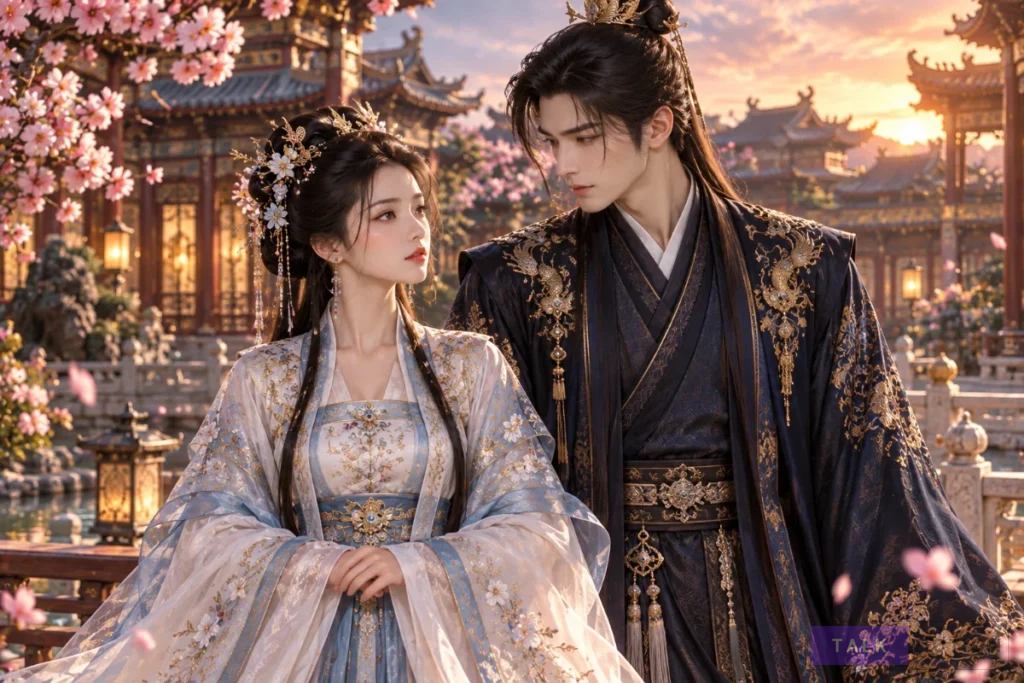
Romance is an important part of the story, but Princess Wei Yang is not purely a romance novel.
The story places significant emphasis on revenge, political conflict, family relationships, and survival.
Wei Yang’s romantic relationships are complicated because she has already experienced betrayal.
She does not easily trust promises of love, particularly after discovering how quickly affection and loyalty can change when political power is involved.
Her relationship with Li Min De develops alongside the larger story rather than replacing it.
This gives the romance a different dynamic from stories where the heroine’s primary objective is simply finding a partner.
Princess Wei Yang Novel vs. The Princess Weiyoung Drama
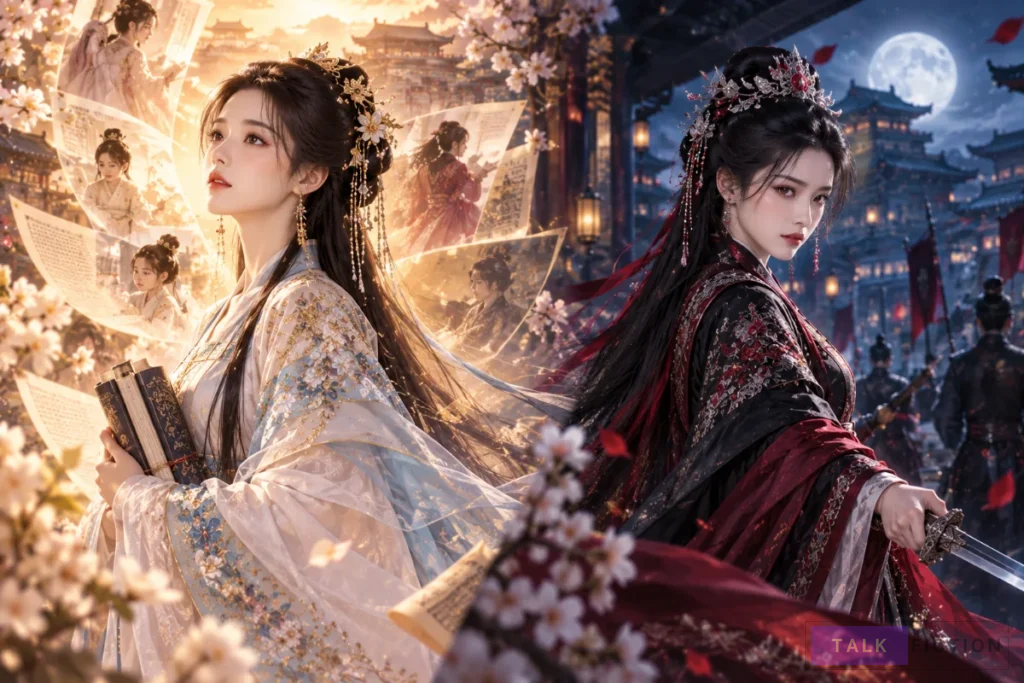
Readers should be aware that the novel and the television adaptation are not identical.
The 2016 drama The Princess Weiyoung stars Tang Yan as Feng Xin’er/Li Weiyoung and Luo Jin as Tuoba Jun. In the drama, Feng Xin’er is the princess of Northern Liang whose kingdom is destroyed. She later assumes the identity of Li Weiyoung, the daughter of a Northern Wei official, and seeks revenge.
The original novel has a different premise.
In the novel, Li Wei Yang herself is the central heroine who experiences rebirth after the tragedy of her first life. Her story is built around a second chance, revenge, family conflict, and her attempts to change the fate she previously experienced.
This distinction is important for readers searching for the Princess Wei Yang novel, because information about the drama can otherwise create confusion about the original story.
Key Differences
| Novel | Drama |
|---|---|
| Li Wei Yang is the central heroine | Feng Xin’er assumes Li Weiyoung’s identity |
| Rebirth is central to the story | Identity substitution is central to the setup |
| Strong focus on Wei Yang’s second life | Strong focus on Feng Xin’er’s revenge |
| Li Min De is important to the novel’s relationship story | Tuoba Jun is the primary romantic lead |
| More extensive political and family schemes | Adapted for television with a more streamlined storyline |
The television adaptation was based on Qin Jian’s novel, but it made substantial changes to the characters and plot.
How Many Chapters Does Princess Wei Yang Have?
The original Princess Wei Yang novel is complete.
Novel reference databases list it as 292 chapters plus a finale and extras, while some chapter-reading indexes count the concluding material separately and list 293 entries.
The novel was originally published in Chinese, with Qin Jian credited as the author. Its listed genres include historical drama, romance, and fantasy, with tags covering reincarnation, revenge, royalty, betrayal, political schemes, and a strong female protagonist.
Alternate Titles for Princess Wei Yang
If you are searching for this story on different novel websites, you may encounter several different names.
Common alternate titles include:
- The Princess Wei Yang
- The Princess Weiyoung
- Princess Weiyoung
- Jin Xiu Wei Yang
- The Concubine’s Daughter Is Poisonous
- 庶女有毒
- 锦绣未央
These titles refer to the same original work or its various English/transliterated naming conventions.
Is Princess Wei Yang Worth Reading?
For readers who enjoy Chinese historical novels featuring reincarnation, revenge, political schemes, family conflict, and complicated romance, Princess Wei Yang offers a story built around a strong second-chance premise.
Its biggest attraction is the transformation of Li Wei Yang.
She begins her second life with knowledge of the people and circumstances that destroyed her first one. Instead of simply accepting her fate, she actively tries to reshape it.
The story also gives considerable attention to family politics. The Li household is almost as important as the imperial court because relationships between siblings, wives, concubines, and relatives constantly affect the larger political story.
Readers who prefer fast-paced romance may find the novel more politically focused than expected. The story spends substantial time developing schemes and conflicts rather than making romance its only priority.
Final Thoughts on Princess Wei Yang
Princess Wei Yang is ultimately a story about a woman who refuses to let her first life define her second.
Li Wei Yang’s greatest weapon is not physical strength. It is the knowledge she carries from the life she lost.
After being betrayed, she learns that trust must be earned, power must be handled carefully, and survival sometimes requires patience rather than confrontation.
Her second chance gives her the opportunity to challenge the people who once controlled her fate, but changing the future proves just as complicated as surviving the past.
For readers interested in Chinese historical romance novels with revenge, rebirth, palace politics, family drama, and strategic female protagonists, Princess Wei Yang is a story worth exploring.
Note: The original novel and the 2016 drama adaptation share the same source material but have significant differences in premise, characters, relationships, and plot development. Readers should keep that distinction in mind when looking for information about Princess Wei Yang.