




Don’t Call Me Stepmom is a drama-romance comic centered on a complicated family relationship and the tension created when a young woman becomes a man’s stepmother.
The series is also indexed under the titles My Stepmom and Her Secret, and available listings credit Andromeda11 as the author. It is categorized primarily as Drama and Romance.
This guide covers the Don’t Call Me Stepmom story, premise, characters, relationship dynamics, themes, chapter information, alternate titles, and reading details.
What Is Don’t Call Me Stepmom About?

Don’t Call Me Stepmom follows a young woman who enters a new family situation after becoming a stepmother.
The central conflict comes from the difficulty of establishing her place within that family. The title itself reflects the tension: she may have the legal or family role of a stepmother, but the relationship does not automatically create emotional acceptance.
The story focuses on the characters’ reactions to this new family structure and the secrets surrounding their relationships.
Rather than presenting the family situation as simple, the series builds its drama around boundaries, trust, identity, attraction, and emotional conflict.
Don’t Call Me Stepmom Story Summary
The story begins with a major change in the protagonist’s family circumstances.
A young woman becomes connected to a man who already has a child, placing her in the position of becoming a stepmother.
However, becoming part of the family does not mean that everyone immediately accepts her.
The relationship between the stepmother and the younger member of the family becomes an important source of tension. The characters have to deal with a new family hierarchy while also carrying their own assumptions and unresolved feelings.
The title Don’t Call Me Stepmom reflects this conflict over identity and how the characters understand their new roles.
As the story progresses, the focus expands beyond the initial family arrangement and explores the secrets and emotional complications surrounding the characters.
Who Is the Main Character?
The female protagonist is the central figure through whom readers experience the story’s complicated family dynamics.
She enters a situation where her relationship to the family is defined before genuine emotional trust has developed.
This creates several challenges.
She has to navigate:
- A new family structure
- A complicated relationship with her stepchild
- The expectations attached to becoming a stepmother
- Emotional boundaries
- Secrets within the household
- Her developing relationship with the child’s father
Her position makes her both an outsider and a member of the family at the same time.
The Stepfamily Dynamic

The most important element of Don’t Call Me Stepmom is the relationship between the characters within the new family.
A stepfamily can look straightforward from the outside, but the characters do not necessarily experience their roles in the same way.
The protagonist may see herself as someone trying to establish a place in the household, while another character may view her arrival as an unwanted disruption.
That difference in perspective creates much of the story’s emotional tension.
Why Does the Title Say “Don’t Call Me Stepmom”?
The title reflects the conflict surrounding the protagonist’s identity within the family.
Being called “stepmom” is not simply a matter of terminology in the story. It represents a role that the characters may not emotionally accept.
The title therefore points toward one of the series’ central questions:
Can a family relationship be created simply because people are given new titles, or does genuine acceptance have to develop over time?
That tension gives the story its distinctive emotional premise.
The Relationship Between the Stepmother and Stepchild
The relationship between the stepmother and stepchild is complicated from the beginning.
They do not enter the situation with the same expectations, and neither character necessarily knows how the relationship should work.
This creates opportunities for:
- Misunderstandings
- Emotional distance
- Arguments
- Suspicion
- Gradual changes in trust
- Uncomfortable family situations
The story uses these conflicts to explore how difficult it can be for people to adjust when an established family structure suddenly changes.
The Role of Secrets
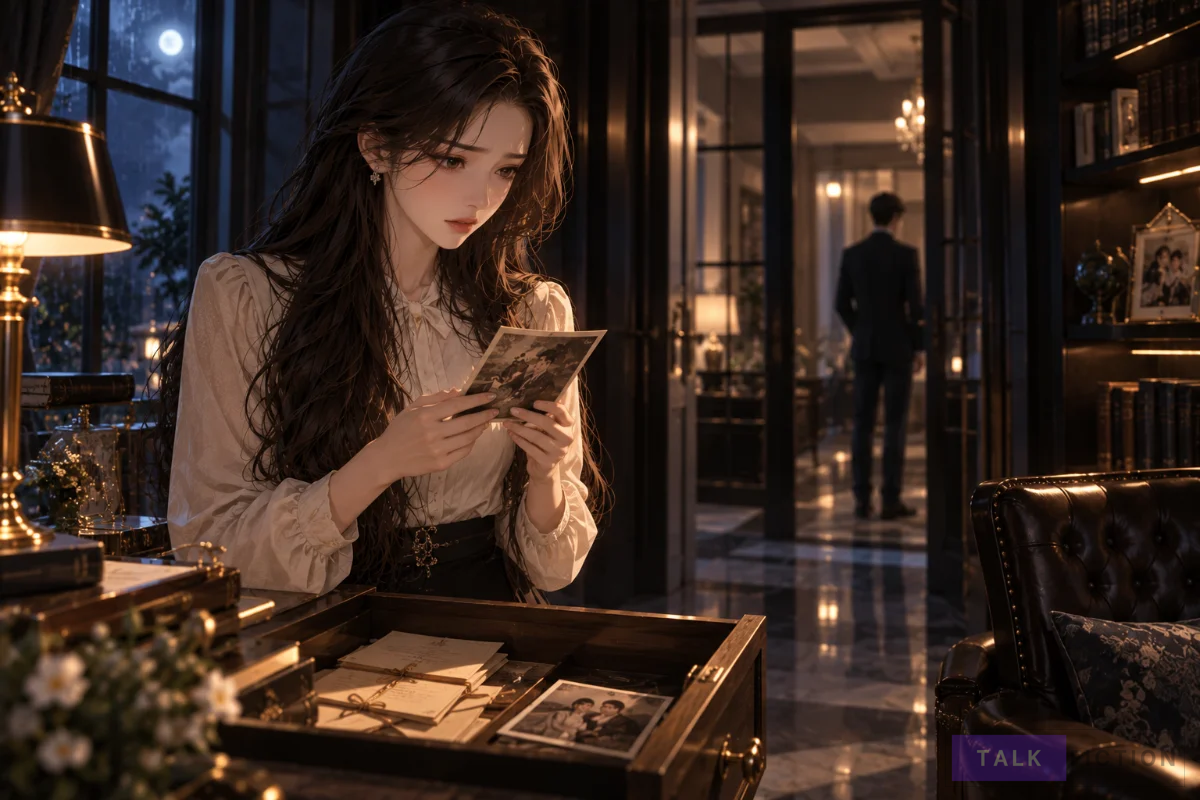
The word “Secret” is associated with the series through the alternate title Her Secret, which is one of the titles used for the work in indexed databases.
Secrets are important because the characters do not necessarily understand one another’s motivations from the beginning.
Information that is hidden from one character can change how another character’s actions are interpreted.
This makes the story less straightforward than a simple stepfamily drama.
Romance in Don’t Call Me Stepmom

Romance is one of the listed genres for the series.
However, the romantic elements are closely connected to the complicated family situation surrounding the protagonist.
The story therefore combines relationship development with:
- Family conflict
- Emotional uncertainty
- Secrets
- Trust issues
- Changing relationships
- Personal boundaries
This combination gives the series a stronger drama component than a straightforward romance story.
Main Themes

Family and Identity
The characters have to determine what their new family roles actually mean.
Acceptance
Being given a family title does not automatically create emotional acceptance.
Trust
The characters must decide how much they can trust one another when important information is hidden.
Boundaries
The story repeatedly deals with the question of where personal and family boundaries should exist.
Secrets
Hidden information creates misunderstandings and changes how characters perceive one another.
Complicated Relationships
Rather than presenting relationships as simple, the series focuses on emotional uncertainty and changing dynamics.
Don’t Call Me Stepmom Alternate Titles
The series can appear under several different English and translated titles.
The indexed title variations include:
- Don’t Call Me Stepmom
- My Stepmom
- Her Secret
- La Femme de papa
- La Matrigna
- Meine Stiefmutter
- Mi madrastra
- Minha Madrasta
- This Doesn’t Feel Like Me
The same listing also associates the work with several non-English titles, including 내 맘 같지 않아.
Because title localization can vary between platforms, readers searching for the series may find it more easily by using both Don’t Call Me Stepmom and My Stepmom.
Who Is the Author of Don’t Call Me Stepmom?
The indexed listing for My Stepmom / Don’t Call Me Stepmom / Her Secret credits Andromeda11 as the author.
The same source lists the work as published in 2025 and categorizes it under Drama and Romance.
How Many Chapters Does Don’t Call Me Stepmom Have?
Available indexed chapter information currently lists 51 chapters, with the work marked as completed on that listing.
However, chapter numbering can differ between platforms if additional episodes, special chapters, or publication-specific material are counted separately.
For that reason, readers should check the platform hosting the official version for the most accurate episode count.
Is Don’t Call Me Stepmom Completed?
An indexed listing for My Stepmom, which identifies Don’t Call Me Stepmom and Her Secret as alternate titles, currently marks the series as completed and displays chapters through Chapter 51.
If a platform shows a different number, that may reflect a different episode-counting system.
What Genres Does Don’t Call Me Stepmom Have?
The available listing categorizes the series as:
- Drama
- Romance
The story also contains themes involving:
- Family relationships
- Stepfamily dynamics
- Secrets
- Emotional conflict
- Relationship development
- Personal boundaries
Is Don’t Call Me Stepmom a Manhwa?
The available indexed sources identify the work as a comic/manga-style series, but the sources I could verify do not provide enough reliable information to confidently state a specific Korean publication format or publisher.
Therefore, it is safer to describe it on TalkFiction as a romance-drama comic/webcomic unless you have an official publisher source confirming a Korean manhwa release.
What Makes Don’t Call Me Stepmom Interesting?
The central appeal comes from the unusual family setup.
The protagonist does not simply enter a new romantic relationship. She enters a family in which her new position immediately creates questions about identity and acceptance.
That creates several layers of conflict at once.
A Complicated Family Premise
The protagonist has to establish herself within an already existing family.
Emotional Conflict
Characters have different interpretations of the same relationships.
Secrets
Hidden information creates uncertainty and changes how characters understand one another.
Romance and Drama
The romantic storyline develops alongside family conflict instead of existing independently from it.
Don’t Call Me Stepmom vs Typical Romance Stories
| Feature | Don’t Call Me Stepmom | Typical Romance |
|---|---|---|
| Main conflict | Family and relationship dynamics | Romantic relationship |
| Family structure | Central to the story | Often secondary |
| Stepmother role | Major part of premise | Usually absent |
| Secrets | Important story element | Varies |
| Drama | Strong focus | Depends on series |
| Romance | Major genre | Usually central |
| Identity | Connected to family roles | Usually personal/romantic |
Frequently Asked Questions
What is Don’t Call Me Stepmom about?
It is a drama-romance story centered on a young woman who becomes part of a new family as a stepmother and has to navigate complicated relationships, boundaries, and secrets.
Is Don’t Call Me Stepmom also called My Stepmom?
Yes. My Stepmom is one of the alternate titles associated with the series. Her Secret is another listed title.
Who wrote Don’t Call Me Stepmom?
The available indexed listing credits Andromeda11 as the author.
What genre is Don’t Call Me Stepmom?
It is listed under Drama and Romance.
Is Don’t Call Me Stepmom completed?
An indexed listing currently marks the series as completed.
How many chapters does Don’t Call Me Stepmom have?
The same listing currently displays 51 chapters and marks the series completed.
What is the alternate title for Don’t Call Me Stepmom?
The series is also listed as My Stepmom and Her Secret, along with several localized titles.
What is the main theme of Don’t Call Me Stepmom?
The story focuses heavily on family roles, emotional boundaries, secrets, acceptance, and complicated relationships.
Why doesn’t the character want to be called stepmom?
The title reflects the emotional tension surrounding the protagonist’s new family role. Being given the title does not automatically mean that the relationship has been emotionally accepted.
Is Don’t Call Me Stepmom the same as My Stepmom?
Available indexed information identifies My Stepmom as an alternate title for Don’t Call Me Stepmom.
Is Don’t Call Me Stepmom a completed story?
The currently indexed listing marks the work as completed.
Does Don’t Call Me Stepmom focus only on romance?
No. Although romance is a listed genre, family conflict and drama are also central to the story.
Where can I find Don’t Call Me Stepmom?
Availability depends on the platform and region. Because several unofficial pages use alternate titles, readers should verify the publisher or official platform before reading.
Final Thoughts
Don’t Call Me Stepmom combines romance and drama through an unusual family setup where becoming a stepmother creates emotional and interpersonal complications.
Instead of treating family roles as simple labels, the story explores how difficult it can be to establish trust and acceptance after a major change in family structure.
With its themes of family, secrets, identity, romance, boundaries, and emotional conflict, the series is aimed at readers who enjoy relationship-driven drama rather than a straightforward romance plot.
The work is also searchable under My Stepmom and Her Secret, which is important for readers trying to locate different listings of the same series.

Other Articles