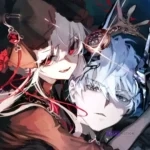


Children of the Holy Emperor is a politically driven fantasy novel that blends power struggles, religious authority, and personal ambition within a rigid imperial system. Rather than focusing solely on battles or magic, the story emphasizes hierarchy, legacy, and the psychological burden placed on those born into absolute power. The novel gradually unfolds a world where divinity and rulership are tightly intertwined, and where the emperor’s children must navigate a dangerous path shaped by expectations they never chose.
Story Overview of Children of the Holy Emperor
The story is set in a holy empire ruled by an emperor believed to possess divine authority, either blessed by the gods or elevated through religious doctrine. His children are raised not as ordinary heirs, but as symbols of divine legitimacy and political stability. From a young age, they are trained in governance, magic, military command, and religious doctrine, with little regard for personal freedom. The narrative follows one or more imperial children as they begin to question their assigned roles and the true nature of the empire’s holiness.
As the plot develops, internal conflicts within the imperial family become increasingly apparent. Rival factions inside the court attempt to manipulate the emperor’s children for political gain, while religious institutions seek to maintain control by reinforcing the idea that the emperor’s bloodline is sacred. The protagonist is often caught between obedience and self-preservation, forced to make choices that reveal the cruelty hidden beneath the empire’s polished image. Betrayal, quiet rebellion, and strategic compromise shape the story’s progression rather than open revolution.
The Burden of Divine Bloodline
One of the novel’s strongest themes is the burden of being born into a sacred bloodline. The emperor’s children are not allowed to exist as individuals, but as living proof of divine rule. Their worth is measured by usefulness, loyalty, and symbolic purity rather than personal character. This creates intense psychological pressure, as mistakes are treated not as human flaws but as threats to the empire’s legitimacy. The novel uses this theme to explore how power inherited at birth can become a form of imprisonment.
Religion as a Tool of Control
Religion in Children of the Holy Emperor is portrayed less as a source of comfort and more as an instrument of authority. The holy doctrine is used to justify political decisions, suppress dissent, and reinforce social hierarchy. Priests and religious leaders often wield influence equal to or greater than nobles, blurring the line between faith and governance. Through this lens, the novel critiques how religious narratives can be shaped to serve power rather than truth.
Family, Loyalty, and Internal Conflict
Despite sharing blood, the emperor’s children are often positioned as rivals rather than siblings. Loyalty within the family is fragile, shaped by fear, ambition, and survival instincts. The novel explores how forced competition erodes natural familial bonds, replacing affection with suspicion. At the same time, brief moments of genuine connection highlight what is lost when family becomes a political institution instead of a source of support.
Power, Identity, and Self-Determination
A central theme of the novel is the struggle for identity in a world that assigns value before birth. The protagonist’s journey is less about overthrowing the empire and more about reclaiming personal agency. Decisions are often subtle rather than dramatic, reflecting the reality that resistance within absolute systems is rarely loud. This slow, internal rebellion gives the story emotional depth and distinguishes it from traditional power-fantasy narratives.
Moral Ambiguity and Political Realism
Children of the Holy Emperor avoids clear distinctions between good and evil. Most characters operate within moral gray zones, shaped by fear, duty, or survival. Even acts of cruelty are often justified through ideology or necessity. This realism adds weight to the story, portraying an empire sustained not by villains alone, but by ordinary people making compromised choices within an oppressive structure.
Conclusion
In conclusion, Children of the Holy Emperor is a layered fantasy novel that uses imperial politics and religious authority to explore themes of identity, control, and inherited power. Its strength lies in its psychological depth and realistic portrayal of life within an absolute system, where rebellion is dangerous and obedience is costly. By focusing on internal conflict rather than spectacle, the novel delivers a thought-provoking narrative that resonates with readers who appreciate morally complex, character-driven fantasy stories.

Other Articles

Just Twilight Webnovel: Story Overview, Themes & Key Highlights
Raising Villains the Right Way: Novel Story Overview & Themes