



Warning: This article contains spoilers for Cat in the Chrysalis.
Cat in the Chrysalis is a completed romance fantasy manhwa about Kitt, a young woman who carries feelings for Edwin, a man she meets in a library. Before she can confess those feelings, Edwin dies. Kitt then awakens in a time before his death and attempts to change his fate, only to discover that Edwin has endured a cycle of death and time reversals.
The central conflict is not simply whether Kitt can save the man she loves. It is whether two people caught in a repeating tragedy can find a way forward when one of them has already lost the will to live.
This guide explores the confirmed premise, Kitt and Edwin’s relationship, the importance of time regression, the story’s main themes, and what readers should know about the completed series.
What Is Cat in the Chrysalis About?
Cat in the Chrysalis is a Korean romance fantasy manhwa created by Bae Hee-jin, with sangroksu and butter also credited on the official English release.
The story centres on Kitt, a young woman who experiences neglect from her family and develops a quiet affection for Edwin after encountering him in a library. She never gets the opportunity to tell him how she feels before he dies.
Unable to leave that loss behind, Kitt awakens at a point before the tragedy occurs. This gives her an opportunity to approach Edwin again and attempt to prevent the outcome she remembers.
However, saving him proves more complicated than simply changing the past. Kitt learns that Edwin has been caught in a cycle of death and time reversals for much longer than she initially understands.
The story combines romance, tragedy, and a time-regression mystery. Its central question is whether Kitt’s determination can help Edwin escape a fate that has repeatedly defeated him.
Cat in the Chrysalis Spoilers: Major Story Revelations
1. Kitt’s Feelings for Edwin Begin in the Library

One of the most important elements of the story is Kitt’s quiet affection for Edwin, whom she encounters in a library.
Kitt’s feelings develop in circumstances where she is already struggling with neglect from her family. Edwin becomes an important person in her emotional world, but she never gets the chance to reveal her feelings before his death.
This establishes the tragedy that drives the narrative. Kitt is not simply trying to win someone’s affection; she is trying to change a loss that has already happened.
The library encounter also gives their relationship a personal foundation before the time-regression mystery takes centre stage.
2. Edwin’s Death Changes Kitt’s Future
Edwin’s death is the event that transforms Kitt’s private feelings into a desperate attempt to alter the future.
In an ordinary romance, a missed confession might lead to regret or a second chance at a later meeting. Here, the stakes are much higher because Kitt believes she has lost Edwin permanently.
Her return to an earlier point in time gives her another opportunity to act. Instead of merely remembering what happened, she can attempt to prevent it.
This development introduces the story’s central tension: knowing that a tragedy occurred does not necessarily mean knowing how to stop it.
3. Kitt Returns to a Time Before the Tragedy

Kitt’s return to the past is the major turning point of the premise.
She awakens before the event that led to Edwin’s death, creating the possibility of a different outcome. Her knowledge of what happened gives her a reason to intervene, but it does not guarantee success.
Her new opportunity forces her to reconsider how she approaches Edwin and what it might take to change his circumstances.
Time regression is therefore more than a fantasy device. It creates a conflict between memory and possibility: Kitt remembers the loss, while the future she wants to change has not yet unfolded again.
4. Edwin Has Experienced More Than One Time Loop
One of the most significant revelations in the official synopsis is that Edwin is caught in a cycle of death and time reversals.
Kitt initially returns to the past because she wants to save him. She then discovers that Edwin’s experience of the tragedy is much more complicated than she realised.
He has already endured repeated cycles, and his will to live has deteriorated over time. This changes how readers understand his coldness and reluctance to embrace another chance.
The conflict is no longer simply about finding the right action to prevent one death. It is also about confronting the emotional consequences of repeatedly experiencing a seemingly unavoidable tragedy.
5. Edwin Has Lost the Will to Live
Edwin’s emotional state is one of the most important obstacles Kitt faces.
From Kitt’s perspective, another chance to save Edwin is precious. From Edwin’s perspective, repeated encounters with death have left him exhausted and unwilling to keep fighting.
This difference creates a difficult emotional conflict. Kitt cannot assume that changing the circumstances will automatically restore his hope.
Her determination must confront the reality that Edwin has his own experiences, fears, and feelings. Saving someone requires more than wanting a different outcome for them.
6. Kitt Refuses to Give Up on Edwin
Despite Edwin’s cold demeanour, Kitt continues trying to help him.
Her persistence gives the story its emotional direction. She is not satisfied with simply returning to the past or enjoying another encounter with the person she loves. She wants to find a way for them to move beyond the repeated tragedy.
At the same time, her determination raises an important question: can love help someone recover their desire to live, or must that person also find a reason to keep going?
The story’s central relationship develops within this tension between Kitt’s hope and Edwin’s exhaustion.
7. Their Relationship Becomes a Fight Against Fate
As Kitt attempts to save Edwin, their relationship becomes connected to the larger time-regression mystery.
Their challenge is not simply to recreate a happier version of the past. They must confront a repeating pattern in which death and the return to an earlier point in time have already shaped Edwin’s life.
This gives the romance a tragic dimension. Kitt’s feelings provide motivation, but affection alone cannot guarantee that the cycle will end.
The official synopsis establishes this struggle as the core of the story, although it does not disclose the exact sequence of the final confrontation or every detail of the resolution.
Kitt and Edwin: Why Their Relationship Matters
Kitt and Edwin’s relationship works through the contrast between their emotional positions.
Kitt approaches their renewed encounter with the hope that she can change what happened. Edwin, by contrast, has endured repeated reversals and has largely lost his will to live.
Their different experiences create the central emotional conflict:
- Kitt represents persistence: She believes that another attempt may lead to a different future.
- Edwin represents exhaustion: Repeated tragedy has made it difficult for him to believe that change is possible.
- Their relationship creates tension: Kitt wants to save Edwin, but she must also confront the depth of his despair.
- The time-loop premise raises the stakes: Their future depends on more than a single romantic confession or decision.
This is why the story’s romance is inseparable from its fantasy premise. The time reversals affect how the characters understand their relationship and whether a different outcome seems possible.
What Does Time Regression Mean in Cat in the Chrysalis?
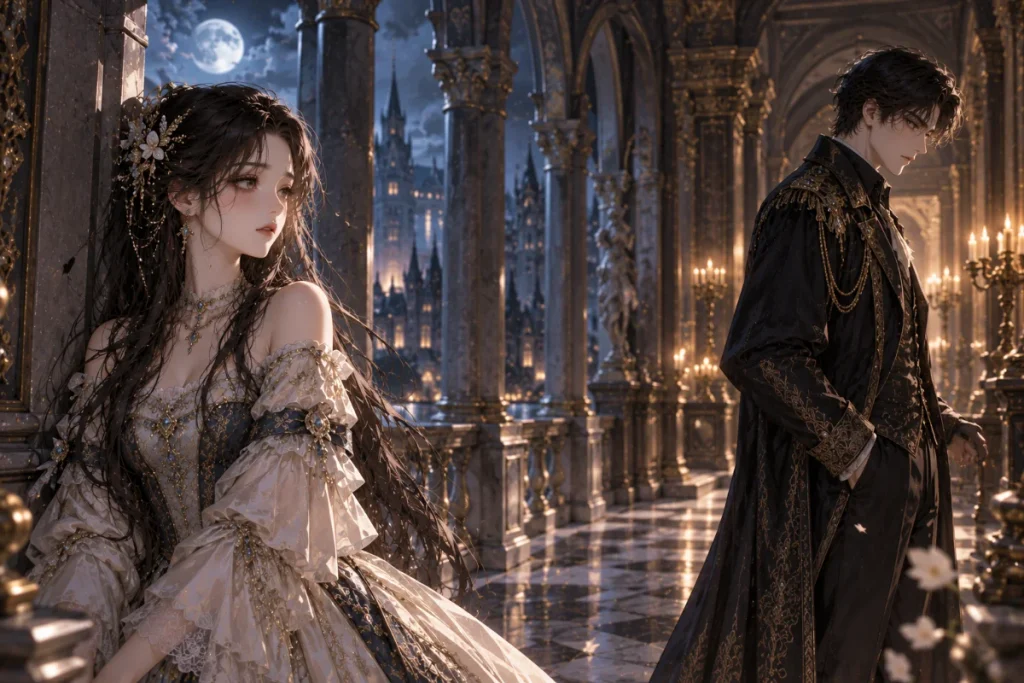
Time regression is a fantasy storytelling device in which a character returns to an earlier point in time, often retaining memories of events that have already happened.
In Cat in the Chrysalis, Kitt’s return to the past gives her an opportunity to prevent Edwin’s death. The discovery that Edwin has also experienced repeated death and time reversals makes the premise more complicated.
The device serves three main purposes.
It creates a second chance
Kitt can act on information that she did not have the opportunity to use before Edwin’s death.
It makes the past emotionally difficult
The events may be happening again, but Kitt’s memories mean she cannot experience them as though nothing has happened.
It raises the question of whether fate can change
If death has repeated itself across multiple cycles, the characters must confront the possibility that their usual choices will not be enough to produce a different result.
Cat in the Chrysalis Ending Explained
Does Cat in the Chrysalis have a confirmed ending? Yes. The official Tapas listing marks the series as completed and lists 82 episodes.
However, the official series synopsis does not reveal the precise final outcome of Kitt and Edwin’s struggle. It confirms the time-regression premise and Edwin’s repeated cycles of death, but it does not establish exactly how the final cycle resolves.
For that reason, it would be misleading to claim that Kitt definitively breaks the cycle, that Edwin dies permanently, or that the couple receives a particular happily-ever-after ending without checking the final episodes.
What can be established is the central question the ending must resolve: whether Kitt and Edwin can escape the repeated tragedy that has shaped their relationship.
Readers who want the definitive answer should consult the final episodes on the official Cat in the Chrysalis series page on Tapas.
Main Themes in Cat in the Chrysalis
First love and regret
Kitt’s affection for Edwin becomes painful because she never reveals her feelings before his death. Her return to the past gives her an opportunity to confront that regret rather than simply live with it.
Grief and emotional exhaustion
Edwin’s repeated experiences of death have left him without the will to live. His situation highlights the emotional consequences of facing the same tragedy again and again.
Hope versus despair
Kitt believes that the future can change, while Edwin has difficulty believing another attempt will make a difference. Their conflicting perspectives provide the emotional foundation of the story.
Fate and second chances
The time-regression premise asks whether a character can change a tragic outcome by returning to the past. Edwin’s repeated cycles make that question especially difficult.
Love as persistence, not a guaranteed solution
Kitt’s determination is important, but the story also acknowledges that Edwin’s struggles cannot be reduced to a simple romantic problem. Their relationship develops against the larger challenge of repeated loss and despair.
Is Cat in the Chrysalis Completed?
Yes. The official English Tapas listing marks Cat in the Chrysalis as a completed series and lists 82 episodes.
Readers can check the series page for episode availability and the platform’s current access conditions. Some episodes may require an account or a specific unlocking method.
Where Can You Read Cat in the Chrysalis?
The official English comic is available on Tapas:
Read Cat in the Chrysalis on Tapas
The series page provides the official description, creator credits, episode listings, and completion status. It is the best place to check the published version rather than relying on spoiler articles that may confuse this story with unrelated works sharing similar titles.
Frequently Asked Questions
What is Cat in the Chrysalis about?
It follows Kitt, who returns to a time before Edwin’s death in an attempt to save him. She discovers that Edwin has already endured a cycle of death and time reversals.
Who is the main character in Cat in the Chrysalis?
Kitt is the central female character. Her feelings for Edwin and her determination to change his fate drive the story.
Who is Edwin?
Edwin is the man Kitt develops feelings for after meeting him in a library. His repeated experiences of death and time reversals are central to the plot.
Why does Kitt return to the past?
Kitt returns to a time before Edwin’s death, giving her another opportunity to try to save him.
Does Edwin experience time regression too?
The official synopsis confirms that Edwin is caught in a cycle of death and time reversals, meaning his experience extends beyond Kitt’s initial return to the past.
Is Cat in the Chrysalis a romance manhwa?
Yes. Tapas categorises it as romance fantasy, combining a romantic relationship with a fantasy premise involving time regression.
Is Cat in the Chrysalis completed?
Yes. The official English Tapas listing marks the series as completed and lists 82 episodes.
Does Cat in the Chrysalis have a happy ending?
The official synopsis does not establish the exact final outcome. Check the final episodes on Tapas for a definitive answer.
What is the main conflict in Cat in the Chrysalis?
Kitt wants to save Edwin, but his repeated experiences of death have left him without the will to live. Their struggle involves both changing the future and confronting the emotional cost of the past.
Where can I read Cat in the Chrysalis in English?
You can read the official English comic on Tapas, where the series page provides episode listings and access information.
Who created Cat in the Chrysalis?
The official Tapas listing credits Bae Hee-jin, sangroksu, and butter.
What makes Cat in the Chrysalis different from other romance fantasy stories?
Its central romance is shaped by repeated death and time reversals. Kitt’s hope for a second chance contrasts with Edwin’s exhaustion after experiencing the cycle repeatedly.
Final Thoughts
Cat in the Chrysalis combines a tragic first-love premise with time regression and the emotional consequences of repeated loss. Kitt returns to the past hoping to save Edwin, only to discover that his struggle is far more complicated than a single tragic event.
The story’s central appeal lies in the contrast between Kitt’s determination and Edwin’s despair. Their relationship raises questions about fate, hope, and whether another chance can truly change a painful future.
For readers who want to follow Kitt and Edwin’s story through its completed English comic release, the official Cat in the Chrysalis page on Tapas is the best place to start.

Other Articles